Leoš Janáček: The Excursions of Mr Brouček, Barbican Hall, London EC2, 4☆☆☆☆. Review: Clare Colvin.
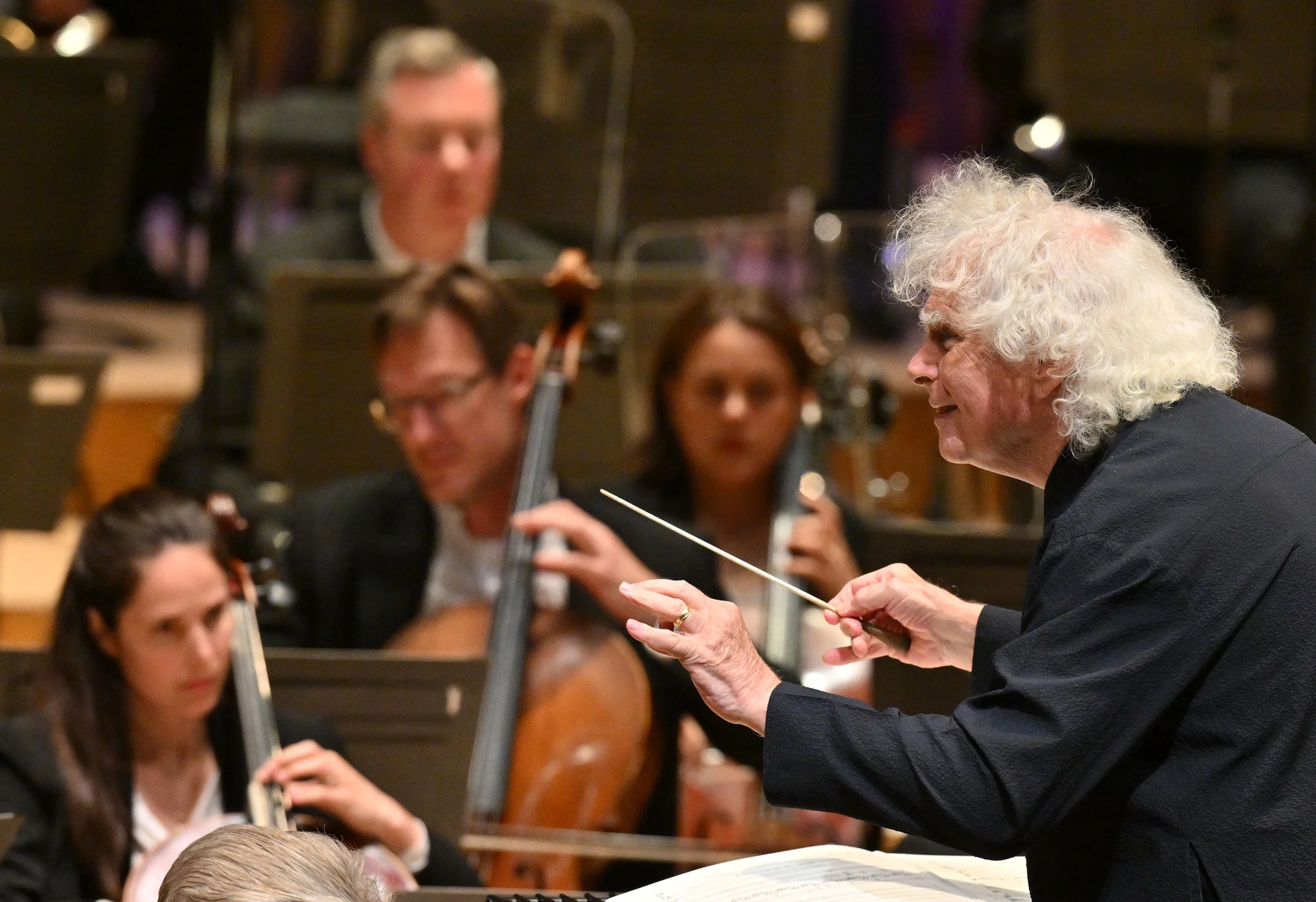
Photo Credit: Mark Allan.
Leoš Janáček: The Excursions of Mr Brouček, Barbican Hall, London EC2,
4☆☆☆☆. Review: Clare Colvin.
“Reaching for the Moon with Leoš Janáček.”
The process of creating Janáček’s satirical comedy The Excursions of Mr Brouček was almost as tangled as the plot of the opera itself. Indeed, one of the librettists - Viktor Dyk - could well have provided a real life plot for opera when he was arrested and imprisoned by the Hapsburg authorities for his resistance activities. The opera was completed after nearly ten years in March 1917, then reworked by Janáček into two operas. The excursion to the “Moon” , that is, the artists’ bohemian quarter of 1880s Prague, with the second excursion diving into 15th century medieval Prague during the siege from the German armies of the Holy Roman Empire.
Central to the two different parts is the character of drunken landlord Mr Brouček, a connoisseur of beer and sausages. Based on the poet Svatopluk Cech’s popular Mr Brouček stories, he’s brilliantly portrayed by tenor Peter Hoare, who we first see telling off Lucy Crowe’s lovely Malinka for being distraught about the betrayal by her two-timing lover Mazal (Czech tenor Aleš Briscein). In his drunkenness Brouček offers to marry her himself, forgetting his promise once he meets the artistic flotsam of Prague. Much of his invective is directed toward the town authorities for their neglect of the city - “A puddle, it’s a disgrace, I’ll write to the papers.”
In the second opera, the drunken Brouček falls through time travel into the underground tunnels of 15th century Prague. Here the tone darkens as Brouček is arrested as a probable German spy and told to speak plain Czech or be hanged. It’s clear that past German Imperialism and fascism lurked under the surface of the cheerful satire, and the early part of the 20th century was already shadowed by the rise of Naziism.
Sir Simon Rattle conducts the lively LSO with exuberance, and there’s a strong feeling of camaraderie between sections of musicians, and equally with the audience. Rattle will be back in 2026 to conduct another of Janáček’s rarely performed operas, The Makropulos Affair on 13 and 15 January.
Conductor: Sir Simon Rattle; Tenebrae chorus conductor: Nigel Short