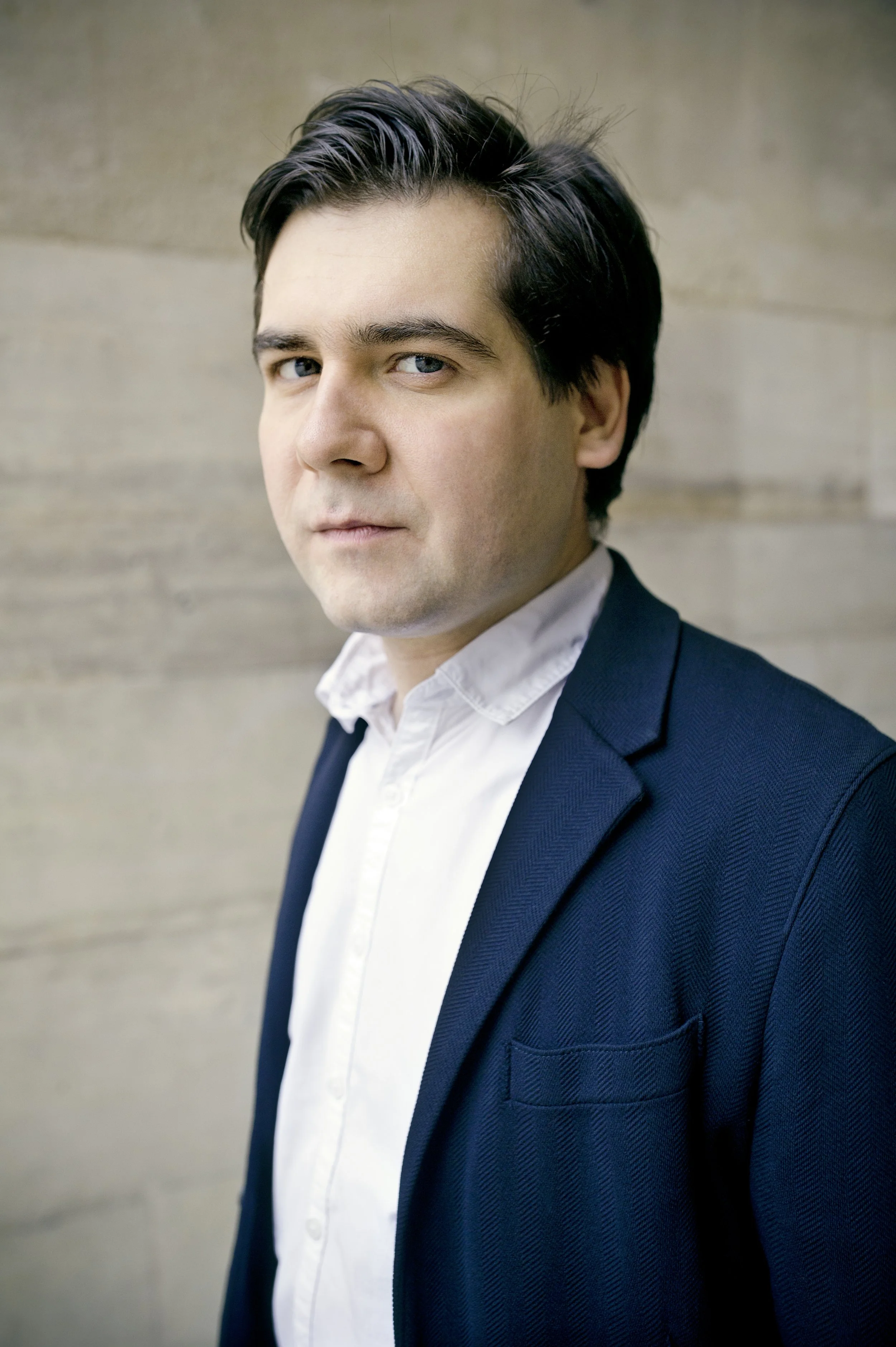
Photo credit: Jean-Baptiste Millot
Vadym Kholodenko plays Liszt and Beethoven,
Royal Concert Hall, Nottingham | 25 October 2026
⭐⭐⭐⭐⭐ Review by William Ruff
“Piano playing of huge physical stamina, unerring power, concentration and style.”
The new season of Sunday morning piano recitals at Nottingham’s Royal Concert Hall began with the Mount Everest of piano sonatas: Beethoven’s No 29, his so-called Hammerklavier Sonata, a work which is a summit of achievement not only within Beethoven’s own writing for piano but across the whole vast expanse of music written for piano…by anyone.
And to play it was a pianist who really should be much better known in the UK: Vadym Kholokov. Born in Kyiv in 1986, he was a child prodigy, someone who has performed across the world from the age of 13 and an artist who won one of music’s most glittering prizes in 2013 when he was awarded Gold Medal at the Van Cliburn International Piano Competition in Fort Worth, Texas. The doors of all the most sought-after concert halls in the world have been open to him ever since. No one can be everywhere at once, of course; all one can hope is that, since his BBC Proms debut just a year ago, he will be playing more concerts in the UK. Because he is a phenomenal talent.
His programme began with Liszt’s La Leggierezza (the second of his Three Concert Studies), much of which consists of fast, delicate, flowing notes and rapid patterns that require not only great technical skill but an unusual ability to control subtle variations of volume and texture. Vadym’s performance had just what Liszt demands: flexible timing, careful shaping of dynamics, the ability to balance strict accuracy with a feeling of improvised spontaneity. This performance created music that felt airborne, fleeting and luminescent.
And then came the Hammerklavier, whose massive scale and technical, intellectual and interpretative demands present extraordinary challenges to even the greatest pianists. It was written in 1818 at a time when Beethoven was facing huge personal difficulties: severe deafness, money problems and his battle for custody of his nephew. It’s hardly surprising that his musical ideas became more radical and extreme.
The sonata’s opening explodes with a sort of fanfare of fortissimo chords which is soon answered by much quieter, more reflective ideas, so establishing a pattern of tension and release that governs the whole of this vast first movement. The second movement is brief and impish before one of the most intense slow movements ever written: an immense, searching lament which seems to arise from the depths of despair and grief. The finale opens secretively with ethereal scales, aggressive outbursts and a series of giant trills before Beethoven presents a huge fugue of almost impossible complexity, a mind-boggling display of counterpoint that offers a solution to the preceding struggles. No wonder the Hammerklavier has long been revered…and feared.
Vadym Kholokov’s performance was stunning for its virtuosity and clarity. There was an irresistible propulsion to the first movement and the intensity of thought he brought to the great slow movement was deeply involving in its intimacy and sense of unfolding fantasy. His playing of the unforgiving finale was handled with huge physical stamina, unerring power, concentration and style.
It’s over two hundred years since Beethoven wrote it, but the Hammerklavier remains a formidable challenge for performers and audiences alike. A large audience gathered on Sunday morning to hear this spiritual testament from a composer who, from the depths of deafness and isolation, set out to prove that he was still capable of the unprecedented. Their response could be gauged not just from the volume of applause at the end but by the quality of silence throughout: no coughs, no shuffling – just rapt attention.
Vadym Kholokov playing in the opening concert of this year’s Nottingham Classics Sunday Piano Series