Andrey Gugnin (piano). Lakeside, Nottingham, 13 November 2025, 5☆☆☆☆☆. Review: William Ruff.
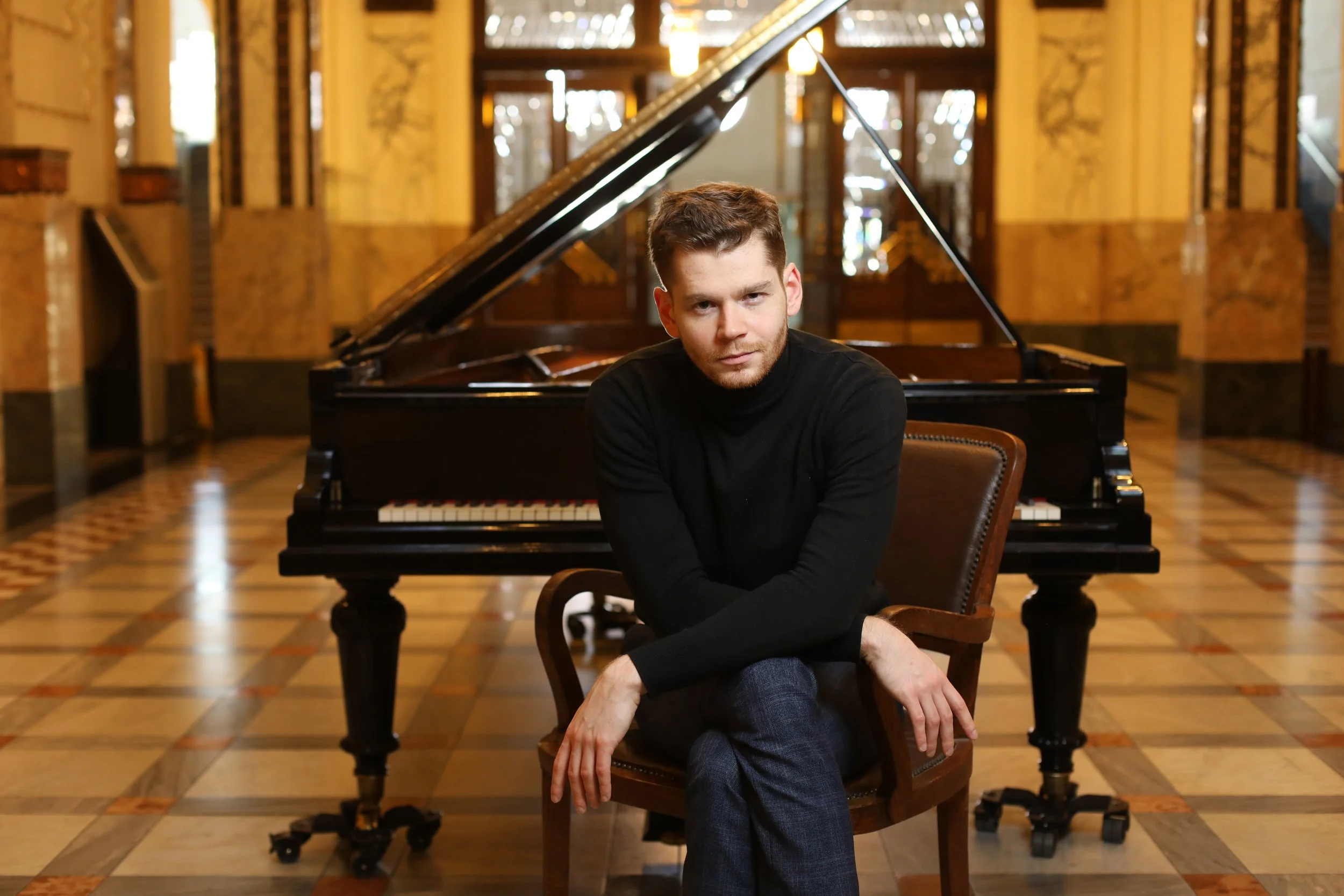
Photo Credit: Lakeside.
Andrey Gugnin (piano). Lakeside, Nottingham, 13 November 2025,
5☆☆☆☆☆. Review: William Ruff.
“Andrey Gugnin: not just a virtuoso, but also a poet and dramatist of the keyboard.”
Just reading what Andrey Gugnin was going to play at his Lakeside recital left me feeling short of breath and in need of a lie-down. On the morning after hearing him scale some of the Everests of the piano repertoire I am still in a state of recovery.
His choice of Tchaikovsky, Chopin and Liszt meant full-blooded Romanticism: heart-on-sleeve emotion, all the colours of the sonic rainbow and astonishing virtuosity. Gugnin has the sort of all-encompassing technique which is as much a marvel to watch as it is to hear, his hands often lost in a blur as he hurled fistfuls of notes into the audience.
He started with an arrangement (by Mikhail Pletnev) for piano of movements from Tchaikovsky’s Sleeping Beauty. As Gugnin is at pains to point out, what Pletnev has done with Tchaikovsky’s music is not simply to reduce it for one instrument. It is rather a virtuosic reimagining, something which proudly stands on its own feet and never feels as if it is apologising for not being orchestral. Gugnin clearly loves both what Tchaikovsky and Pletnev have written, allowing full exploitation of the technical and coloristic potential of the piano, effectively turning the orchestra’s sounds into a symphonic piano work. The suite starts darkly and dramatically before moving through elegant court dances, magical apparitions and vivid character pieces. Despite all the fireworks, it was perhaps the more tender, lyrical movements which impressed most in Gugnin’s performance: the lyrical, expansive Andante and the famous ‘Rose Adagio’, a sublime test of balance and lyrical expression, which Gugnin played exquisitely.
Instead of resting and recuperating afterwards, Andrey Gugnin launched straight into Chopin’s Op. 10 Etudes. These aren’t a bit the sort of dry, mechanical studies which their name suggests. Instead, Chopin infuses then with poetic depth, dramatic fire and musical sophistication, each one creating a vivid, self-contained sound-world at the same time as testing a particular technical problem. It’s the sort of music which grips you by the throat at the outset and simply won’t let you go.
Etude No 1 starts with a breathtaking surge of split chords which span the entire keyboard, Gugnin’s playing creating the effect of heroic, untamed energy, like a cascading waterfall. No 3 by contrast is slow and deeply lyrical. Gugnin’s right hand sang a poignant, operatic aria with perfect smoothness, building to a passionate climax and then returning to the serene, heart-wrenching main theme. After this there came the whirlwind of perpetual motion that is the 4th Etude, the famous ‘Black Key’ No 5…and much more, before the concluding ‘Revolutionary’ study, the one where the left hand drives the piece with a relentless, roaring torrent of passagework over which the right hand declaims a powerful, heroic melody. It was all rather breath-taking.
After the interval came Liszt’s B minor Sonata, another supreme test of piano technique as well as being a journey deep inside its composer’s psychology, a work which explores the widely contrasting elements of Liszt’s character: the egotistical celebrity versus the man of religious humility. The Sonata offers challenges throughout its 30 minutes: its architecture needs careful shaping; its technical demands are legendary; its raw emotional power was seen by Liszt’s first audiences as positively dangerous. Somewhat unreasonably, it’s a work which demands that its performer should be not just a virtuoso, but also a poet, dramatist and philosopher of the keyboard. And that is what Andrey Gugnin proved himself to be on Thursday night. No one who was there will easily forget the experience.
Oh, and he even had strength left to play Rachmaninov’s Prelude in G as an encore.
Andrey Gugnin (piano)