BBC Philharmonic Orchestra. Royal Concert Hall, Nottingham, 07 November 2025, 5☆☆☆☆☆, Review: William Ruff.
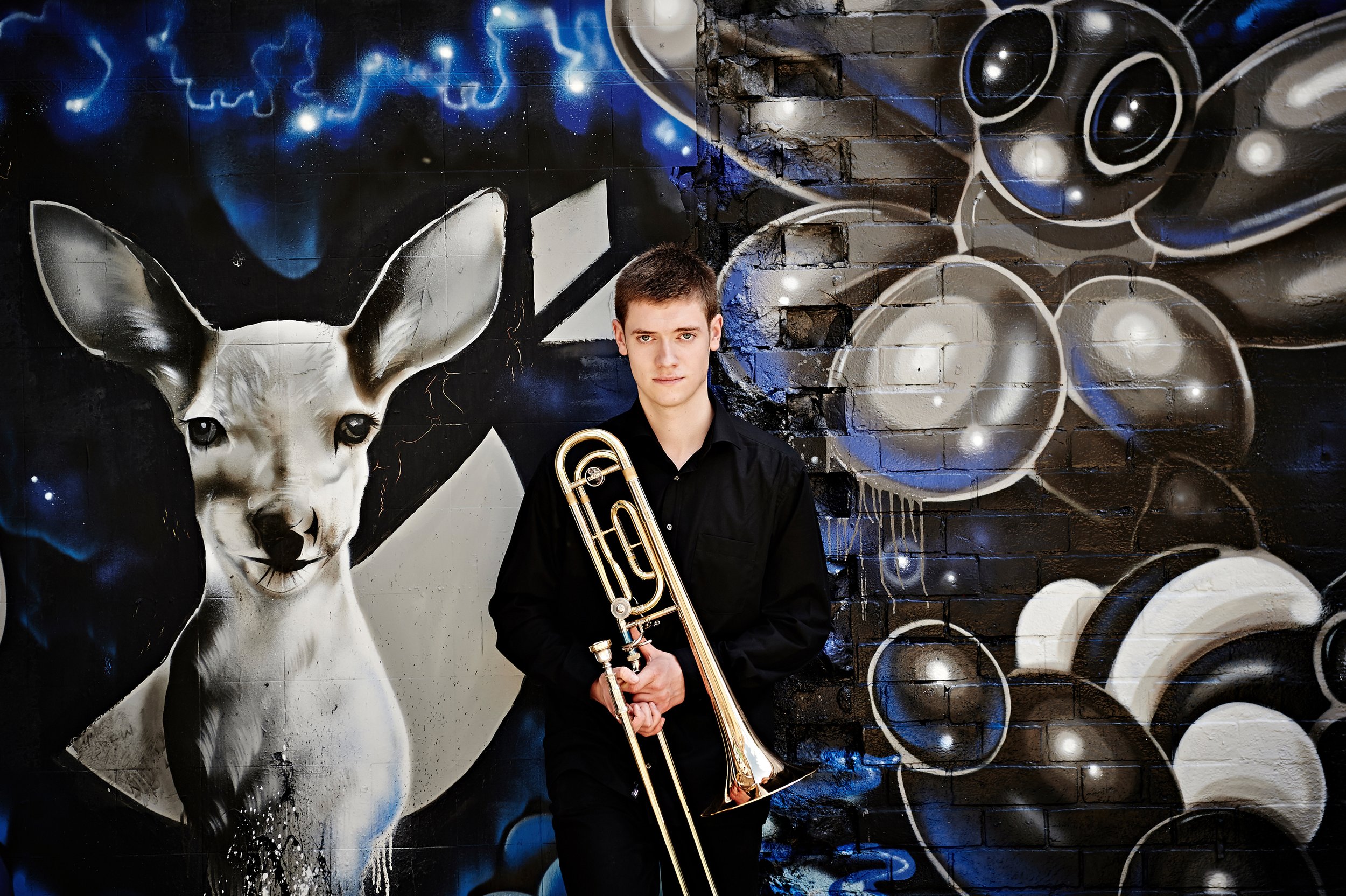
Photo Credit: Kaupo Kikkas.
BBC Philharmonic Orchestra. Royal Concert Hall, Nottingham, 07 November 2025, 5☆☆☆☆☆,
Review: William Ruff.
“A massive BBC Phil plays with thrilling attention to detail.”
If the first three concerts of this year’s Nottingham Classics season have played safe with tried-and-tested programmes, then it fell to the BBC Philharmonic to spice things up with something new.
Dani Howard’s Trombone Concerto is not only new but it’s almost certainly the first concerto for the instrument to be played in a Nottingham Classics concert. She composed it during the lockdowns of 2020 and it was first performed the following year by Peter Moore, the trombonist for whom it was written and who was in Nottingham to play it on Friday evening. The work, celebrating the unsung heroes of the pandemic (such as bus drivers and postal workers) is in three movements: Realisation, Rumination and Illumination.
The whole work bursts with energy as well as virtuosity in its brilliant use both of the trombone and the orchestra. Dani Howard trained as a percussionist, so it’s perhaps not surprising that the whole piece is rhythmically driven. In it she’s managed to produce music which makes an immediate impact (Friday’s audience was very enthusiastic) at the same time as offering artistic depth.
Soloist Peter Moore is a phenomenon. He won the BBC Young Musician competition in 2008 when he was only 12. There is nothing he can’t do with the trombone and Dani Howard certainly exploits his extraordinary virtuosity in her concerto. In the second movement his handling of the haunting ‘multiphonics’ (playing multiple notes simultaneously) had to be heard to be believed. And in the concluding ‘Illumination’, the composer writes a vibrant, celebratory dance, pushing the trombone to dizzying limits – but always finding Peter Moore equal to the task, in a finale which celebrates the human spirit’s capacity for positive change.
Also on the programme was Debussy’s La Mer, his highly evocative ‘sea symphony’ in three movements. The first traces the course of ‘Dawn to Midday on the Sea’, full of sharp detail and culminating in a magnificent passage for cellos as the sun shines upon the waves. The second ‘Play of the Waves’ is a glittering scherzo, and the final ‘Dialogue between the Wind and the Sea’ paints a picture of the blues, greys and whites of scudding clouds and a restless ocean. The brilliance of Debussy’s writing makes it very challenging to play and conduct as every small detail has to be exactly coloured and in focus. Conductor Elena Schwarz conjured exactly that degree of precision from a supersized BBC Phil – and it was this that made the performance so thrilling.
The final work in the concert also offered plenty of sonic spectacle: Mahler’s 1st Symphony, in which the composer uses the orchestra as a vast, expressive machine, capable of the widest range of sound: from the tiniest whispers to the most cataclysmic roars. The symphony is packed with incident: the sounds of nature, military fanfares, rustic folk dances, Mahler’s own songs, oompah bands and one of the eeriest funeral processions in all music. As the massive finale progresses from apocalyptic despair to blazing triumph, Mahler seems intent on wringing every last drop of energy from the huge orchestra at the same time as invigorating all those who hear it. Just when you think the orchestra can’t turn up the volume any louder, Mahler instructs the entire brass section to stand up. It is one of music’s most thrilling moments: Elena Schwarz and the BBC Philharmonic didn’t let us down.
BBC Philharmonic Orchestra, Elena Schwarz (conductor), Peter Moore (trombone).