Brahms’ Fourth Symphony, CSBO, Symphony Hall Birmingham | 4 February 2026 ⭐⭐⭐⭐ Review by David Gray & Paul Gray
Brahms’ Fourth Symphony
CSBO, Symphony Hall Birmingham | 4 February 2026
⭐⭐⭐⭐ Review by David Gray & Paul Gray
“A luminous reading of Strauss’ Four Last Songs and a sturdy Brahms 4.”
Nina Sekhar – Lumina
Strauss – Four Last Songs
Brahms – Symphony No. 4
I sometimes wonder whether there should be a moratorium on contemporary composers being allowed to describe their own music. Shakhar’s comments in the programme for this concert led one to expect a short orchestral work that just started quietly, got louder, then died away. Something like far too many other works by living composers that find their way on to the concert platform these days. In the event her piece, Lumina was a subtle, nuanced and highly engaging work that really held one’s attention.
In a delicate, evocative opening passage, a violin and a vibraphone played with a bow, repeat a glissando descending figure that provides the intervallic building block on which Lumina is constructed. Textures are carefully layered to build to surging crescendos. Motivic figures, with a middle eastern flavour, chase each other contrapuntally round the orchestra. Polychordal blocks surge and crash together. This is highly imaginative and skilled orchestral writing. Conductor, Eduardo Strausser gave a carefully controlled reading and the orchestra played with discipline and tight ensemble.
Soprano, Natalya Romaniv has a substantial, brilliant voice with a rich lower register that joins up nicely with a soaring top. Just the kind of voice that takes Strauss’ Four Last Songs in its stride. Romaniv gave a performance that clearly came from a deep engagement with the text. She seemed to really live them. Phrasing was exquisite throughout, and breathing - a vital consideration if a singer is going to pull these songs off - was organised in exemplary fashion.
Strausser treated the orchestra like a chamber band in a reading the stressed the Classical influences on the composer and eschewed any hint of indulgence. Details shone through translucent textures, beautifully complementing the vocal line. The conclusion of the final song, where the singer seems to just die into the orchestra, was unforgettably haunting.
Brahms’ 4th Symphony is, for all it’s popularity, an unexpected and at times challenging work. Strausser and the orchestra managed the sudden, unexpected, flow of quick-silver first few bars beautifully. The opening movement was initially restrained, stately and sometimes sedate, in terms of tempo and dynamics. This worked out well, giving space for the development of tension to a more tempestuous climax.
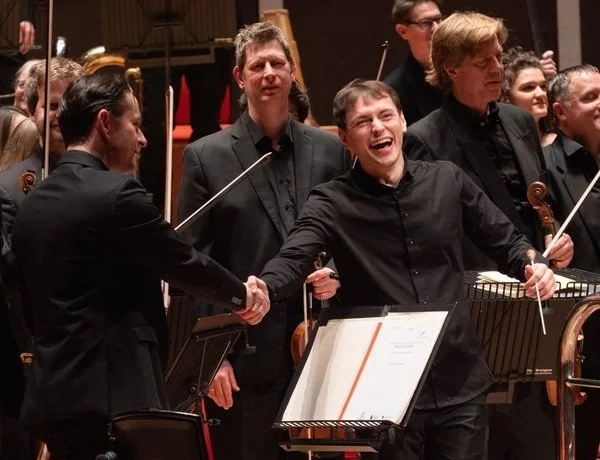
Rather than one of his exquisite, melodically extended slow second movements, Brahms gives us a march-like Andante Moderato. Strausser shaped this wonderfully well and seemed, at times, to wring music from the orchestra through a sheer act of will. He is a passionate, expressive, and charismatic presence on the podium.
There was, however, in issue with the final movement. Brahms’ decision to write what is basically a set of variations is problematic. Some conductors have the gift of finding an integrated, unified flow within the form. Some do not. Strausser seemed to end up hamstrung by his own intellectual engagement with this most intellectual of forms. The movement lacked the heady and unexpected combination of clarity, fire, and dynamism that had characterised the rest of the concert. And so, it got a bit, well, stodgy. A shame. Otherwise, this was a really splendid offering.
Conductor - Eduardo Strausser
Soprano – Natalya Romaniv