Britten & Elgar - CBSO, Symphony Hall, Birmingham, 25 September 2025, 5☆☆☆☆☆. Review: David Gray & Paul Gray
Britten & Elgar - CBSO, Symphony Hall, Birmingham, 25 September 2025,
5☆☆☆☆☆. Review: David Gray & Paul Gray
“An engrossing and exceptionally well-played exploration of 20th Century British music.”
Thomas Adés – Powder Her Face: Hotel Suite
Britten – Double Concerto for Violin and Viola
Elgar – Symphony No. 1 in A flat major, Op. 55
A concert which took us on a back-to-front journey through British 20th Century music started with the most recent work on offer, Hotel Suite from Thomas Adés’ 1995 chamber opera, Powder Her Face.
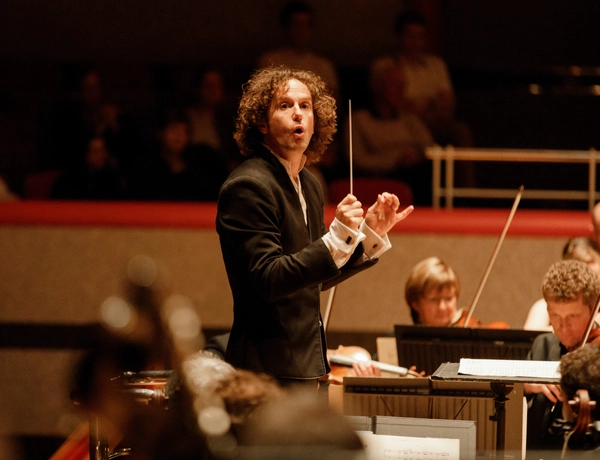
Conductor, Nicholas Collon, accentuated how the piece retains much of the theatricality of its source material by bringing out the composer’s vivid, and at times visceral orchestral textures.
The Suite’s Overture provides a good workout for the wind section, who carry most of the melodic material. The music is suggestive of a tango, but rather than dancing, the movement seems to stagger along, with interrupted rhythms and disjointed fragments of melody. The effect is a little disorientating, but Collon skilfully managed to maintain a feeling of momentum throughout, while the CBSO winds delivered their tell-tale characterful and colourful playing.
This was an absorbing and intelligent reading of a difficult piece, held together by Collon’s impressively clear conducting, and performed with conviction by a band who were clearly enjoying every moment of working with him.
The programme then took us back to the 1930s and Britten’s youthful Double Concerto for Violin and Viola. It is hard to tell why the composer chose not to complete this effective and engrossing work. Soloist Vilde Frang (violin) and Lawrence Power (viola) blended their tones beautifully: Power playing with a brightness and immediacy one does not immediately associate with the viola; Frang with a dark huskiness in the lower register.
In terms of individual technical demands, Britten writes fiendish solo parts, as well as the way in which the parts to intertwine. Both players delivered virtuosic brilliance and seamless ensemble. The Rhapsodic middle movement was exquisitely lyrical, and the final movement – with its insistent use of semiquavers – was exhaustingly and unremittingly intense.
Their encore, an arrangement of Handel’s Sarabande, was truly the icing on the cake.
Finally, back to the beginning, and Elgar’s 1908 First Symphony. This was an integrated and well-grounded reading. Collon managed the tempestuous first movement brilliantly, keeping a firm grip on the line of thought flowing through all of the surging energy. The orchestra played as one, allowing the melodic lines to flow seamlessly from section to section.
A terse and angular reading of second movement provided a telling contrast. The Adagio of this work can sprawl a bit, but Collon shaped it well and gave a nicely contoured interpretation that kept self-indulgence at bay, in favour of yearning nostalgia.
Collon leant into the hints of the noble opening melody that occur throughout the Symphony; the “big tune” was never far away. Thus, the return of the melody at the end really felt like an inevitable return home, and a moment of great and uplifting catharsis.
Nicholas Collon – Conductor
Vilde Frang – Violin
Lawernce Power - Viola