Centre Stage: Baroque Ensemble: 1725 Music in Naples, CBSO, CBSO Centre, Birmingham 24 November 2025, 4☆☆☆☆. Review: David Gray & Paul Gray.
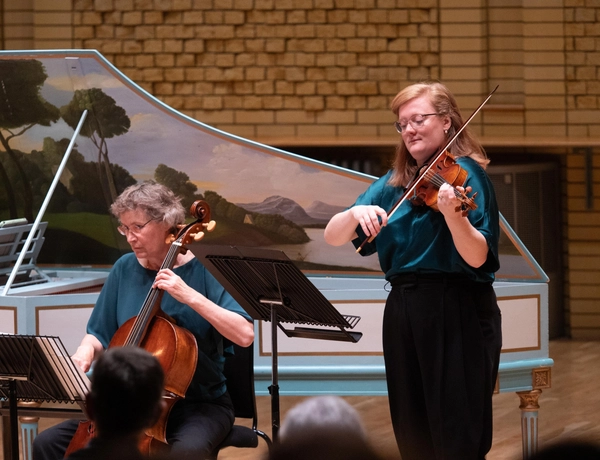
Centre Stage: Baroque Ensemble: 1725 Music in Naples, CBSO, CBSO Centre, Birmingham 24 November 2025,
4☆☆☆☆. Review: David Gray & Paul Gray.
“A fascinating concert focusing on a musically significant time and place.”
Alessandro Scarlatti – Recorder Concerto No 7 in D major
Nicola Porpora – Sinfonie da Camera No 4 in D major
Francesco Mancini – Recorder Concerto No 78 in C minor
(attrb.) Giovani Battista Pergolesi – Trio Sonata No 1 in G major
Nicola Fiorenza – Recorder Concerto in A minor
In 1725 Naples was something of an artistic melting pot. Under the rule of the Habsburgs - having previously been part of the Spanish Empire - and yet very much an Italian city state, with all of the historical baggage that entailed.
An operatic powerhouse, Naples attracted musicians and composers from all over Europe. These composers came to learn but also to leave their own mark in return. Visitors included composers such as Quantz, and the youthful Handel, who composed an early Italian version of Acis and Galatea while there.
CBSO’s Baroque Ensemble chose to celebrate some less well known pieces by composers working in the city around that time. This proved a fascinating choice of period and place. And the small band of instrumentalists played with clear understanding of the period and style.
Alessandro Scarlatti’s Recorder Concerto No 7 in D major, does not immediately come across as what we think of as a concerto. It does not present a strongly foregrounded soloist or have clear alternation of solo and tutti ritornelli. The notion of a concerto was, perhaps, more fluid at this time, and the work is more of a sinfonia - for violins, continuo and recorder.
Nevertheless, balance of ensemble could have favoured recorder player, Annabel Knight a bit better. Her soft tone got rather lost in the texture. But, then again, at times the violin solo lines seemed a little on the thin side and lacked a degree of energy - particularly in the sustained notes which needed more bloom and direction.
Porpora’s Sinfonie da Camara No.4 in D major, was strongly characterised by the interplay between the two violins. Here, the playing picked up a notch in terms of strength of line and commitment. Violins, Kelly McCusker and Georgia Hannant conversed fluently and playfully with one another. ‘Cello, Jacqueline Tyler got to show off some fleet and fancy finger work.
The remaining two recorder concertos were more, well, concerto-like! Knight responded well to this, playing with more presence. The results were truly delightful, particularly in Nicola Fiorenza’s Concerto in A minor. This work gave the soloist not one but two aria like movements with long, fluid, delicately ornamented lines. Knight delivered both with eloquence and haunting beauty.
Those familiar with Stravinsky’s Pulcinella Suite would have been familiar with the opening movement of a Trio Sonata in G major, attributed to Pergolesi, but actually by Domenico Gallo. This is a stately, elegant work, very much part of the style galant. The three string players caught the mood of it perfectly, as did harpsichordist, Warwick Cole, who provided sterling foundational support, both in this work, and throughout the concert.
Annabel Knight – Recorder
Kelly McCusker – Baroque Violin
Georgia Hannant – Baroque Violin
Jacqueline Tyler – Baroque ‘Cello
Warwick Cole - Harpsichord