Concerto Budapest Symphony, OrchestraSymphony Hall, Birmingham | 03 December 2025 ⭐⭐⭐⭐ Review by David Gray & Paul Gray
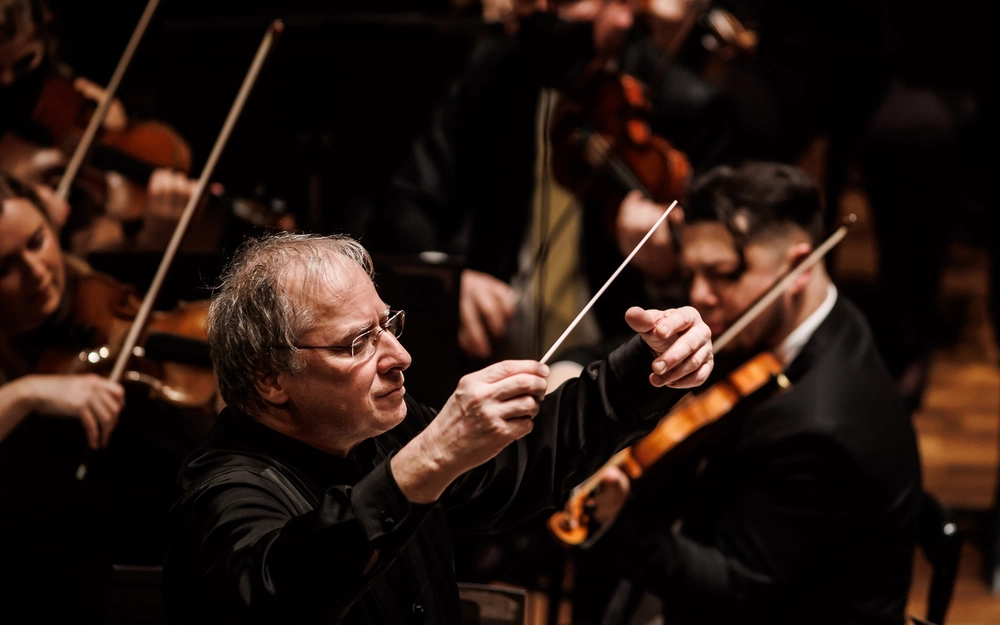
Photo credit: Mudra Laszlo
Concerto Budapest Symphony Orchestra
Symphony Hall, Birmingham | 03 December 2025
⭐⭐⭐⭐ Review by David Gray & Paul Gray
“Some extremely fine playing from this excellent Hungarian ensemble”.
Shostakovich – Symphony No 9, Op 70
Beethoven – Piano Concerto No 3 in C minor, Op 37
Liszt – Les Préludes
Beethoven – Symphony No 5 in C minor, Op 67
Shostakovich’s 9th Symphony was lambasted by Soviet critics at the time of its first performance in 1945 for its apparent triviality and ultimately banned for its failure to express the victorious spirit of the Russian people. As is often the case with this composer, one wonders if his critics were really listening. Yes, there is a lot of light and bounce to the work, but it still has some serious stuff to say.
Conductor, András Keller gave a reading that embraced the piece’s subversive elements. He highlighted the interplay between light and dark to articulate a cohesive argument running though the performance.
His orchestra jumped fearlessly into this major work, playing with purpose and admirable textural clarity that illuminated all the details. Shostakovich wrote so well for the woodwind; this work gives them a number of solo opportunities. Indeed, the fourth movement is mainly an accompanied solo for Bassoon. The lead bassoonist seemed to inhabit the music, giving an emotionally rich rendition which belied any notion this might be an insubstantial symphony.
An artist closely associated with Beethoven, Paul Lewis, took the solo part in that composer’s 3rd Piano Concerto, playing with a rich, burnished tone, fluid lines and effortless virtuosity. This was an intelligent and beautifully organised reading from both soloist and band. All the pieces slotted together like an exquisite piece of marquetry.
The quality of the playing was particularly evident during the Largo. Here Lewis opened the movement in a solo passage on which he lavished so much care and attention it seemed as though it were being nurtured into existence, rather than merely played. Keller and his orchestra responded in kind, and the subsequent interplay between the soloist and band was quite magical.
There had to be something Hungarian. The second half opened with a rather bombastic piece of Liszt. It was very well played, but hardly a work of much substance.
Then more Beethoven: his mighty 5th Symphony. This was a big-boned reading which stressed the works epic qualities and perhaps with the idea of an existential struggle with fate. Where the playing during the piano concert had been sinuous and lithe, here it tended more towards the muscular. The result was a little muddy during the opening movement. There could have been more space to let the light shine through. We didn’t get the same clear textural lamination that had been such a delight during the first half of the concert.
And some of the detail got lost in the subsequent movements. There was a moment during the Andante where interesting passage work from the ‘cellos was all but drowned out by heavy accompanying chords.
However, the final movement took flight and brought the concert to a thrilling conclusion.
András Keller – Conductor
Paul Lewis - Piano