Guarneri Trio Prague, Lakeside, Nottingham | 07 May 2026 ⭐️⭐️⭐️⭐️⭐️ Review by William Ruff
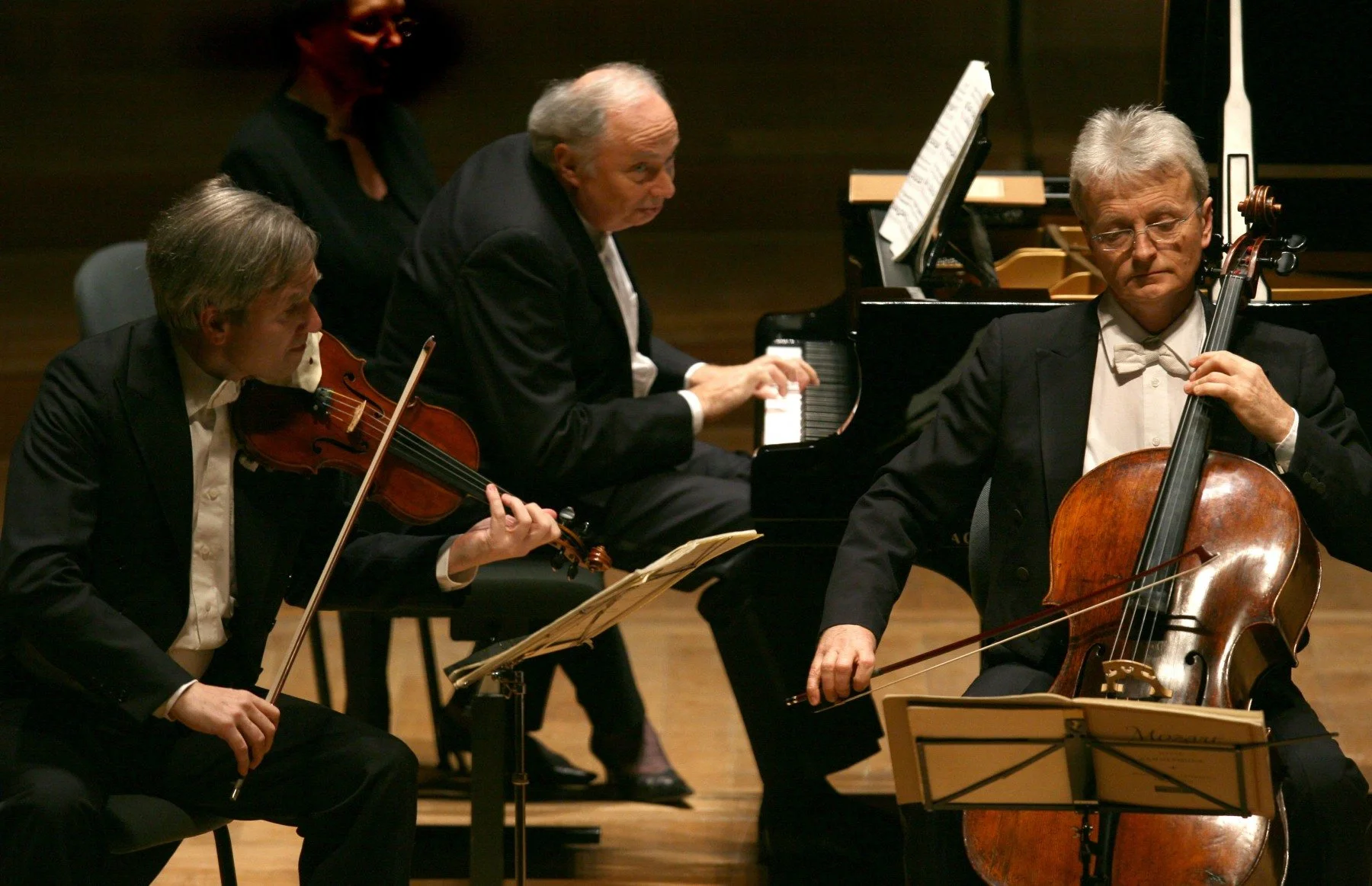
Photo credit: Lakeside
Guarneri Trio Prague
Lakeside, Nottingham | 07 May 2026
⭐️⭐️⭐️⭐️⭐️ Review by William Ruff
“A masterclass in all that makes chamber music special.”
The three members of the Guarneri Trio hold a special place in the hearts of Lakeside’s audience. Some of the reasons are obvious: they have been regular visitors ever since the venue opened; they are very fine musicians who have been perfecting their art over many decades; they reach out to their listeners in ways which both charm and inspire. Perhaps, more than anything, they represent the sort of human and musical vales which many feel are endangered in our wildly unpredictable world. There is, however, one thing which Lakeside audiences don’t like to hear from them – and that’s the word ‘retirement’. It was heard on the lips of cellist Marek Jerie on Thursday night: a cause of dismay (but hardly of surprise) as he revealed that, were they to continue beyond the planned finishing line of late 2027, their combined ages would exceed 240 years!
This latest Lakeside concert was a masterclass in all those ingredients which make chamber music so special. For their listeners this was like eavesdropping on a supremely civilised conversation in which each instrument is a unique personality, arguing, teasing or comforting. Lakeside is the ideally intimate venue to experience their playing: where you can hear every breath, bow stroke and subtle inflection.
All this was apparent even in the charming miniature with which they started their concert: Beethoven’s tiny Trio in B flat, a work he wrote for the ten-year-old daughter of close friends, something to encourage her in her piano studies. Pianist Ivan Klánsky introduced the main theme with ideal lightness and clarity: a gentle, almost lullaby-like melody with simple accompaniment. Throughout this piece the piano led but it’s as if the strings (Čenek Pavlík, violin and Marek Jerie, cello) conversed rather than competed.
As a complete contrast they followed this with Beethoven’s ‘Archduke’ Trio. This is one of the wonders of the piano trio repertoire: a grand, four-movement symphony for three instruments, its scope, ambition and emotional range equalling the large-scale works that Beethoven was writing at the time. This is music which flows in the Guarneris’ veins, and it was fascinating to see how almost telepathically they explored and exploited the work’s warm, chorale-like opening and the ways in which its musical ideas are developed. It was as if thematic fragments were being passed among all three instruments like whispered secrets. The witty scherzo burst with high spirits and the serene, hymn-like slow movement had a memorably beautiful ending, dissolving directly into the finale and its breathless race to an exhilarating, brilliant finish.
After the interval came Dvorak’s ‘Dumky’ Piano Trio, so-called because of its origins in folk music: a melancholy song that suddenly erupts into a wild, exuberant dance before returning to sadness. Again, this is music which must have been in the Guarneris’ bloodstream for as long as anyone can remember. Their communication of the work’s ideas and vast emotional range was a joy to hear and to behold. The final movement was typical: a profoundly emotional opening lament (hollow-sounding piano chords, desperate sighs from the cello) suddenly breaking into a wild, accelerating folk dance called (appropriately) a furiante. The trio ended in a blaze of stomping, fierce joy, as if sorrow had been expelled by sheer rhythmic force.
Huge audience cheers led to two encores: both by Dvorak, both delightful and two more reasons why the Guarneri Trio’s retirement is something Lakeside’s audience would rather not contemplate.
Guarneri Trio Prague
Čeněk Pavlík – Violin, Marek Jerie – Cello, Ivan Klánský – Piano