Leoš Janáček’s The Makropulos AffairLondon Symphony Orchestra, Sir Simon Rattle; Barbican Hall, London EC2 ⭐⭐⭐⭐ Review by Clare Colvin
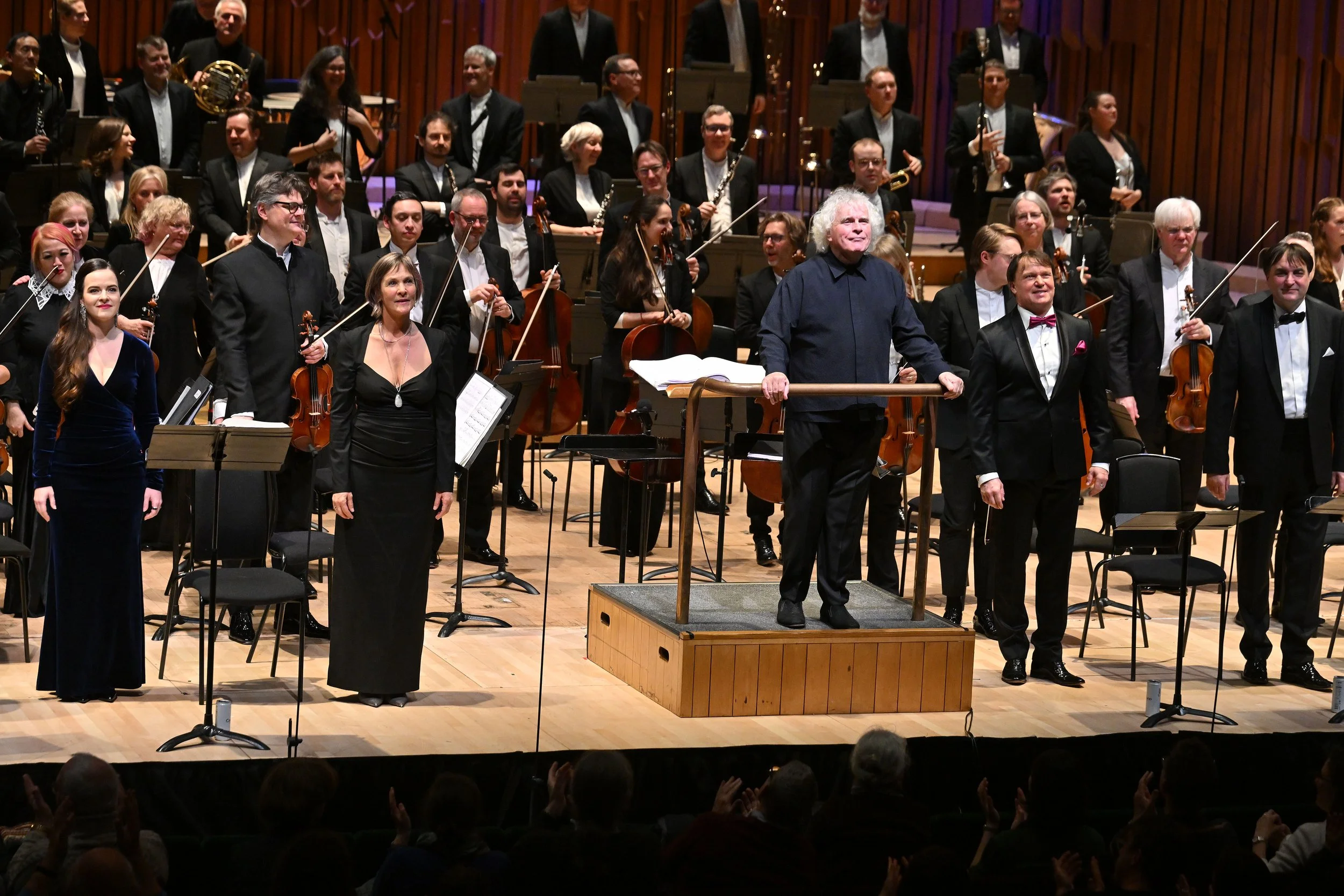
Photo credit: Mark Allan
Leoš Janáček’s The Makropulos Affair
London Symphony Orchestra, Sir Simon Rattle; Barbican Hall, London EC2
⭐⭐⭐⭐ Review by Clare Colvin
“Triumphant finale to Janáček’s great supernatural opera.”
Towards the end of his life the Czech composer Leoš Janáček turned from the influences of nature and country life that had inspired his early operas set in Moldova to the radically different world of an urban lawyer’s office in contemporary 1920s Prague and the supernatural tale of a woman who lived for 337 years after being given the elixir of life in an alchemical experiment. Fired by playwright Karel Čapek’s drama, The Makropulos Affair, seen in Prague in 1922, Janáček realised the importance of the central thesis - that life was sweet because of death, not in spite of it.
With the hundredth anniversary of the opera there have been more performances. The Royal Opera House staged Katie Mitchell’s production last year that, though musically beautiful, lacked clarity in its interior decor-heavy production. Sir Simon Rattle and the London Symphony Orchestra gave two semi-staged performances on 13 and 15 January at the Barbican Hall that instantly conveyed the complexity of the matter in hand, and brought a brisk pace to the two hours, no interval opera.
The majority of the singers in the Barbican concert are Czech and this seems to give an extra sense of distinction as the clues accumulate during the two-hour performance. German soprano Marlis Petersen takes the role of the diva Emilia Marty who carries in her 337 year old body a beautiful 30-year old impersonation, changing her name as she changes her generation, though always choosing the same initials of E.M., back to the original eight-year old Elina Makropulos, born in Crete in 1575, daughter of the alchemist who was commanded by the Emperor Rudolf II of Hungary to create the elixir of life.
All the men fall in love with Miss Marty, as she desperately seeks the recipe that she knows from her past life is held in a sealed envelope by the Baron Prus (Svatopluk Sem). His son Janek (Vit Nosek) commits suicide when rejected by the Diva. Tremendous well characterised performances from tenor Aleš Briscein as Albert Gregor, Peter Hoare as Vitak the Clerk and Doubravka Novotná as stage-struck young soprano Krista. Alan Oke adds light relief as ancient Count Hauk-Šendorf who recognises Marty as his old Spanish love Eugenia Montez.
Finally, Marty has had enough as the law closes in on her. Those who can die are lucky, she declares. In her final monologue she celebrates that she no longer needs the formula, having nothing more to live for. It is the most rich and vital aria in the entire opera and suggests that Janáček too fell in love with his ice princess.