Southwell Music Festival 2026 Southwell Minster and various venues | 28-31 August 2026 ⭐⭐⭐⭐⭐ Review by William Ruff
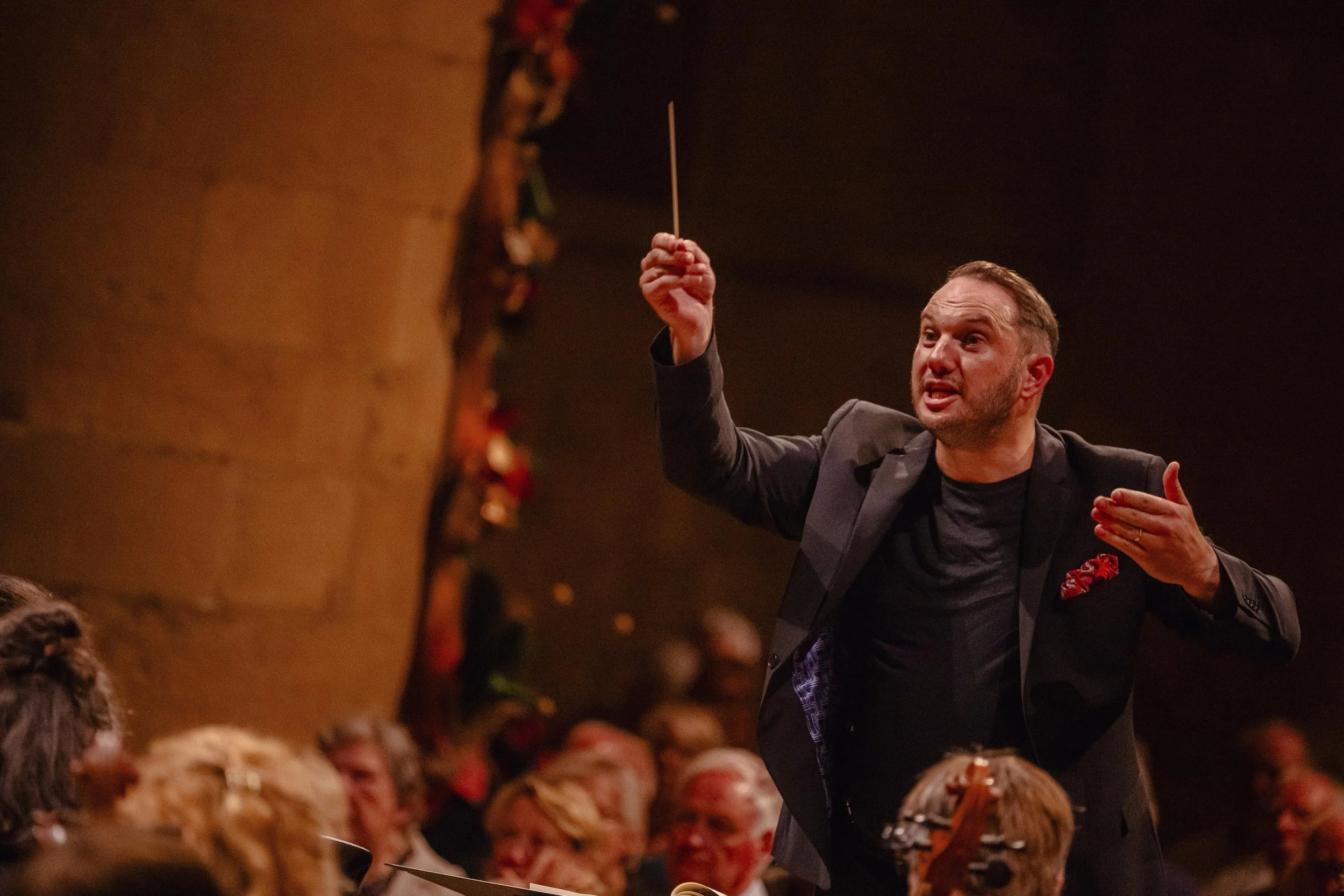
Photo credit: Tom Platinum Morley
Southwell Music Festival 2026
Southwell Minster and various venues | 28-31 August 2026
⭐⭐⭐⭐⭐Review by William Ruff
“Southwell 2026: delivering excellence today and inspiring hope for the future”
At the Southwell Music Festival past, present and future come together in exciting ways. No one entering the Minster could ever ignore the centuries of tradition which seem to breathe from those mighty honey-coloured pillars. However, this Festival has always been eager to look to the future, not only to inject plenty of new music into the programmes but also to nurture new talent and to ask questions not only about the state of music in this country but also about the future of the Arts in general. In short, this Festival not only brims over with fine performances of great music, it also overflows with ideas. It’s a Festival which doesn’t simply encourage people to relax and let beautiful sounds lift their spirits; it also prompts animated discussions about where we are heading as a society and what we can do to protect classical music from the forces currently gathering against it.
The opening concert took place at 9.30am in the Chapter House and seemed to symbolise so many things that the Festival stands for. Two young quartets took part, one of singers, the other of string players and both part of the Festival apprentice scheme. Taking as their starting-point the Chapter House’s Leaves of Southwell, the two quartets presented an imaginative, leafy and flowery programme. The first item (‘My love is like a red, red rose’) was sung offstage, as if mysteriously ushering in the Festival as a whole. They also sang Britten’s Five Flower Songs, settings of poems which depict nature in many moods and which gave the quartet plenty of scope to display not only vocal finesse but also the flexibility to move from poignant to brilliant, from gentle to humorous.
The string quartet played Haydn’s ‘Sunrise’ quartet, a piece which earned its nickname from the opening movement’s gently ascending first violin them – just like a sunrise breaking over the horizon. Their playing was fresh and elegant throughout, the players clearly relishing Haydn’s ingenuity. They also played Caroline Shaw’s 2015 work Plan and Elevation which gave the young players an opportunity to show their mastery of music whose textures are often extraordinary and constantly shifting.
At noon on the Festival’s first day came another chamber concert, this time in the State Chamber. Soprano Anna Dennis, clarinettist Matt Glendening and pianist Libby Burgess began with Schubert’s ‘The Shepherd on the Rocks’, all three giving performances of breathtaking virtuosity and profound humanity. Also featured were Amy Beach’s Theme and Variations for Flute and String Quartet by Amy Beach and Poulenc’s Sextet, a joyous work whose three movements balance bubbling, fast music with episodes that are tender or even bleak. This is music of great verve and subtle sensitivity, qualities in which the ensemble clearly excelled.
The Friday night concert was as notable for its concept as for its brilliant performances. The challenges it posed for the stage crew must have been considerable but they were worth it, the three works growing in size from small chamber ensemble to full 18th century orchestra. Mendelssohn’s Octet came first, the eight string players throwing themselves into the piece with huge energy (all apart from the cellists stood up to play) and all embraced the spirit of chamber music, listening to each other, responding both musically and physically to the ideas that passed from one to the other.
This ensemble was then joined by other string players to play Caroline Shaw’s extraordinary Entr’acte, a work that exercises a hypnotic power over its listeners, unfolding in episodes of breathtaking stillness, sudden silences and gentle pizzicato plucks. At first you think you know where the music is going in its creation of fragile beauty. However, what seemed normal started sliding and lurching into dissonance via unexpected rhythmic jolts, as if the musicians were improvising in a collective dream.
The concert ended with Mozart’s final piano concerto, played by Artist-In-Residence Isata Kanneh-Mason with the full Festival Sinfonia. Isata was on sparkling form in a performance which captured the same chamber intimacy that had characterised the rest of the programme. The central Larghetto was particularly beautiful: a serene aria for the piano, accompanied by muted strings and gently sighing woodwinds, all floating in an otherworldly realm in which time was suspended.
Isata played a central role in this year’s Festival, not only as a concerto soloist but also as recitalist in her stunning Beethoven, Tabakova, Ravel programme, given twice to sell-out audiences in the State Chamber. Her artistry always captivates audiences, as much for its lyrical grace as its technical precision and gift for musical story-telling. Unsurprisingly she also attracted a large crowd for her conversation with Marcus Farnsworth in the town’s library. She spoke with fascinating openness about growing up in the UK’s most musical family and also addressed the lack of music education in many UK schools today, warning of the dangers of treating the Arts in general as being luxuries for the few rather than as essential nourishment for the many.
In another Festival talk Wigmore Hall supremo John Gilhooly made similar points and lamented that so many youngsters are disenfranchised as far as music education is concerned. Although concert halls and festivals can often work wonders, they can’t reach the millions of young people who are being deprived of the life-enhancing experiences of playing, singing and listening to great music. When you experience the four days of a Festival such as Southwell’s it’s difficult not to agree that any society that doesn’t acknowledge the central value of music education simply has the wrong values.
Saturday Night at the Opera surely packed as much musical exuberance into 90 minutes as any musicians have ever managed. Opera came wearing all its masks: comic, tragic, gentle, passionate – and whether the subject matter was serious or light-hearted the performers brought to their roles the same degree of commitment and high-octane energy. Anna Dennis was thrilling as Mozart’s Queen of the Night, all those seemingly impossible high notes presenting no problems for her. Gareth Brynmor John was an exemplary Papageno and Joseph Doody coped with Rossini’s coloratura high-wire challenges with elegant virtuosity. Alastair Brookshaw’s singing of musical theatre numbers such as Sondheim’s ‘Losing my mind’ and Rodgers’ ‘You’ll Never Walk Alone’ must have brought a lump to many a throat. And the Festival Voices deserve praise too: not least for their amazing version of Rossini’s William Tell overture. As conductor Marcus Farnsworth said: who’ll ever want to hear it played by an orchestra again?
In recent years, it is the Sunday night concert that has been the Festival’s climax. This year’s will certainly be remembered for many years to come – and not entirely for musical reasons. It started with the Festival Sinfonia Soloists playing the original chamber version of Wagner’s Siegfried Idyll, written by the composer for his wife’s birthday and celebrated on Christmas Day 1870. It was performed by a small band of musicians playing on the staircase of their house so that the music could waft into her bedroom. It is now much more frequently performed by full orchestra, so this Southwell performance was a rarity – and it was splendid, played with tenderness and intimacy, capturing the rapt serenity of the lullaby music, with strings singing, woodwind glowing and everything combining to give a sense of enchantment, of a gift of love from a composer to his adored wife.
Unfortunately, towards the end of the Idyll something rather alarming started to happen within the Minster. The torrential rain started to breach the church’s defences, dripping onto the stage and onto some of the audience. However, there was no panic. Buckets and towels were deployed, a few people had to move their seats – and crucially the rain eased, so by the time the second half of the concert started, calm had been restored and the music could continue.
And this saved an outstanding performance of Brahms’ German Requiem from a watery fate and a sell-out Minster could experience the combined forces of the Festival Voices and Sinfonia, together with Anna Dennis (soprano) and Gareth Brynmor John (baritone), all conducted by Festival Founder and Director Marcus Farnsworth. It was a performance where you could not only hear but also see and feel the total commitment of everyone taking part – and the effect was both thrilling and deeply moving.
The Requiem is on a larger scale than any other of Brahms’ works and yet in many ways it is essentially an intimate work, especially in its waltz-like fourth movement and the poignant soprano solo of the fifth. Both soloists were excellent: ringingly authoritative and both revealing intelligent insights into the texts they sung. The transparent, beautifully balanced choral singing was equally attentive to detail, each singer sufficiently inside the score to convey the full import of words chosen to offer comfort to the bereaved rather than immortality for the departed. Marcus Farnsworth’s choice of tempi was perfectly judged and the whole performance conveyed a satisfying balance of warmth and lustre with some stunning climaxes – used sparingly by Brahms but, in this performance, to huge dramatic effect.
This year the Festival Programme Book included three pages of snapshots from last year. Apart from the fun of trying to spot oneself, the 72 photos capture Southwell’s amazing variety and energy as well as the warmth and friendship its annual Festival generates. The pictures show musicians, organisers, audience members, venues, conversations, rehearsals, ovations…and just about everything else. This article has been very selective by comparison: no space to mention other talks, chamber recitals, choral and orchestral concerts, Minster services, jazz and folk events, Fringe performances – or the masterclass, the showcase for Young Musicians…and much else besides. As always, when the four days end, there is a note of sadness hanging in the air. However, there will be another Southwell Music Festival next year – and something so richly rewarding is always worth waiting for.
Southwell Music Festival 2026
Featured music events:
The Leaves of Southwell:
Lano Quartet (Shuwei Zuo, Yuwen Fan, Jinhe Huang, Gen Li)
Festival Apprentice Vocal Quartet (Beth Yates, Morven McIntyre, Joseph Martin, Edwin Hughes)
Lunchtime Chamber Concert:
Anna Dennis (soprano), Libby Burgess (piano), Claire Wicks (flute), Lorraine Hart (oboe), Matt Glendening (clarinet), Llinos Owen (bassoon), George Strivens (horn), Katharina Naomi Paul (violin), Tom Aldren (violin), Carmen Flores (viola), Sébastien van Kuijk (cello)
Festival Sinfonia Concert
Isata Kanneh-Mason (piano) with the Festival Sinfonia and Festival Sinfonia Soloists
Marcus Farnsworth (conductor)
A Night at the Opera
Festival Voices with Anna Dennis (soprano), Gareth Brynmor John (Baritone), Alastair Brookshaw (tenor), Joseph Doody (Tenor)
Sara Wolstenholme (violin), Michael Jones (violin), Christina Schoonaker (viola), Alex Holladay (cello), Kate Brooke (double bass), Libby Burgess (piano), Marcus Farnsworth (conductor)
Brahms: A German Requiem
Festival Voices, Festival Sinfonia, Anna Dennis (soprano), Gareth Brynmor John (baritone), Marcus Farnsworth (conductor)