Tenebrae: In Winter’s House Royal Concert Hall, Nottingham | 01 December 2025 ⭐⭐⭐⭐⭐ Review by William Ruff
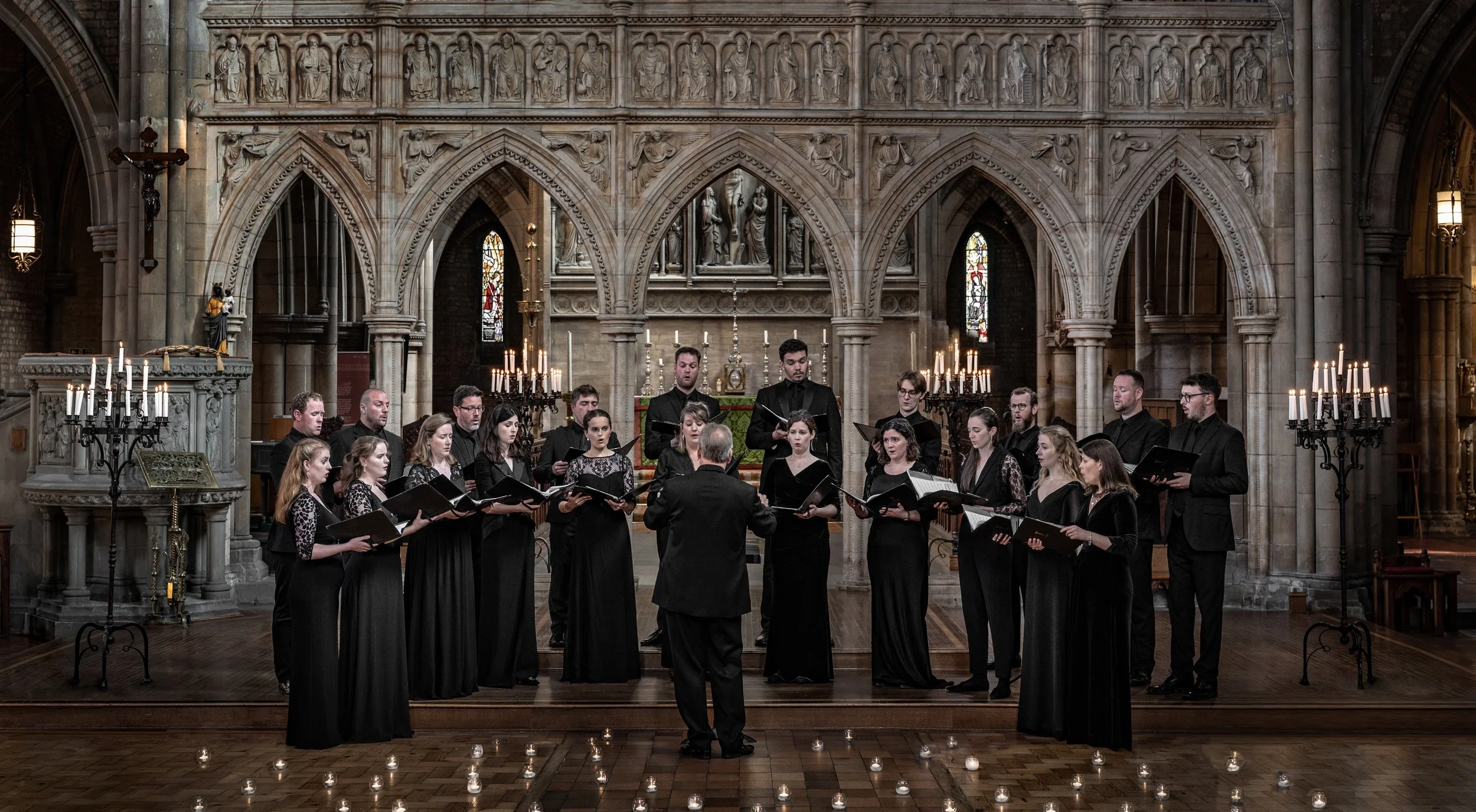
Photo credit: Sim Canetty-Clarke
Tenebrae: In Winter’s House
Royal Concert Hall, Nottingham | 01 December 2025
⭐⭐⭐⭐⭐ Review by William Ruff
“Jewel-like miniatures sung with exquisite clarity and emotional depth”.
There’s not a lot of good news around at the moment, so it’s good to be reminded of at least one thing that this country does better than anyone else. And that is to produce professional chamber choirs of exceptional quality. Tenebrae is one of the best of the best – and to hear them in the high-definition acoustics of Nottingham’s Royal Concert Hall allowed listeners to reach deep inside the sound they make. It’s true that the RCH can’t compete with cathedrals in terms of atmospheric resonance, flickering candles and honey-coloured pillars, but the very plainness of the concert platform and its stark, black curtain allow full concentration on the words, music and the uncanny precision of Tenebrae’s performance.
The pieces chosen for their In Winter’s House programme shy away from the grandly dramatic, instead focusing on the season’s more inward, more intimate side – its stillness, tenderness and fragility. For the most part their programme is a series of jewel-like miniatures, sung with exquisite clarity and emotional depth under the direction of Tenebrae’s founder and conductor Nigel Short. Sally Beamish’s In the Stillness is a good example of music that creates an intense atmosphere of profound calm, seeming to suspend time with its delicate, overlapping lines. Similar serenity is created by Holst’s moving arrangement of In the Bleak Midwinter, four minutes of concentrated wonder.
At their programme’s heart lies Benjamin Britten’s Ceremony of Carols. It’s one of the composer’s supreme achievements for the human voice, written in the least promising of circumstances, whilst on board a Swedish freighter dodging U-boats in 1942. He wrote it with boys’ voices in mind, accompanied by a solo harp (played beautifully and evocatively in this programme by Camilla Pay). The work is sometimes performed in an arrangement for mixed choir – but Tenebrae stick as closely to the composer’s intentions as possible, using just their sopranos and altos. Each of the nine carols has its own, highly distinctive challenge, such as the startling octave leap at the end of ‘Wolcum Yole’ or the taut rhythms of ‘Deo Gracias’ or the breathless chase that ensues in ‘As Dew in Aprille’. None of it is easy but any choir which tackles Britten’s Ceremony has to sing like angels. Tenebrae and their harpist met every challenge in a performance both moving and thrilling.
Other highlights included Edward Naylor’s Vox dicentis (The voice of one crying) with its Renaissance-inspired intricacy, Peter Warlock’s exultant, dance-like Benedicamus Domino and Richard Causton’s The Cradle Song, a piece which captures the breathless awe of the manger scene with delicate textures and luminous harmonies.
Their final piece was a joyous crowd-pleaser: Ian Humphris’ virtuosic and witty arrangement of The Twelve Days of Christmas, complete with (literally) leaping lords and a whole farmyard of geese, hens and various other animals that seem to have wandered into the scene. Tenebrae’s comic timing was superb…and it prompted a thunderous ovation from the audience. An encore was inevitable and Ding Dong Merrily on High fitted the bill very nicely.
Tenebrae
Nigel Short (conductor)
Camilla Pay (harp)