The Forsyte SagaParts I and II, John Galsworthy, adapted by Shaun McKenna & Lin Coghlan, RSC, The Swan, Stratford Upon Avon | Until Saturday 10 January 2026 ⭐⭐⭐⭐ Review by Roderick Dungate
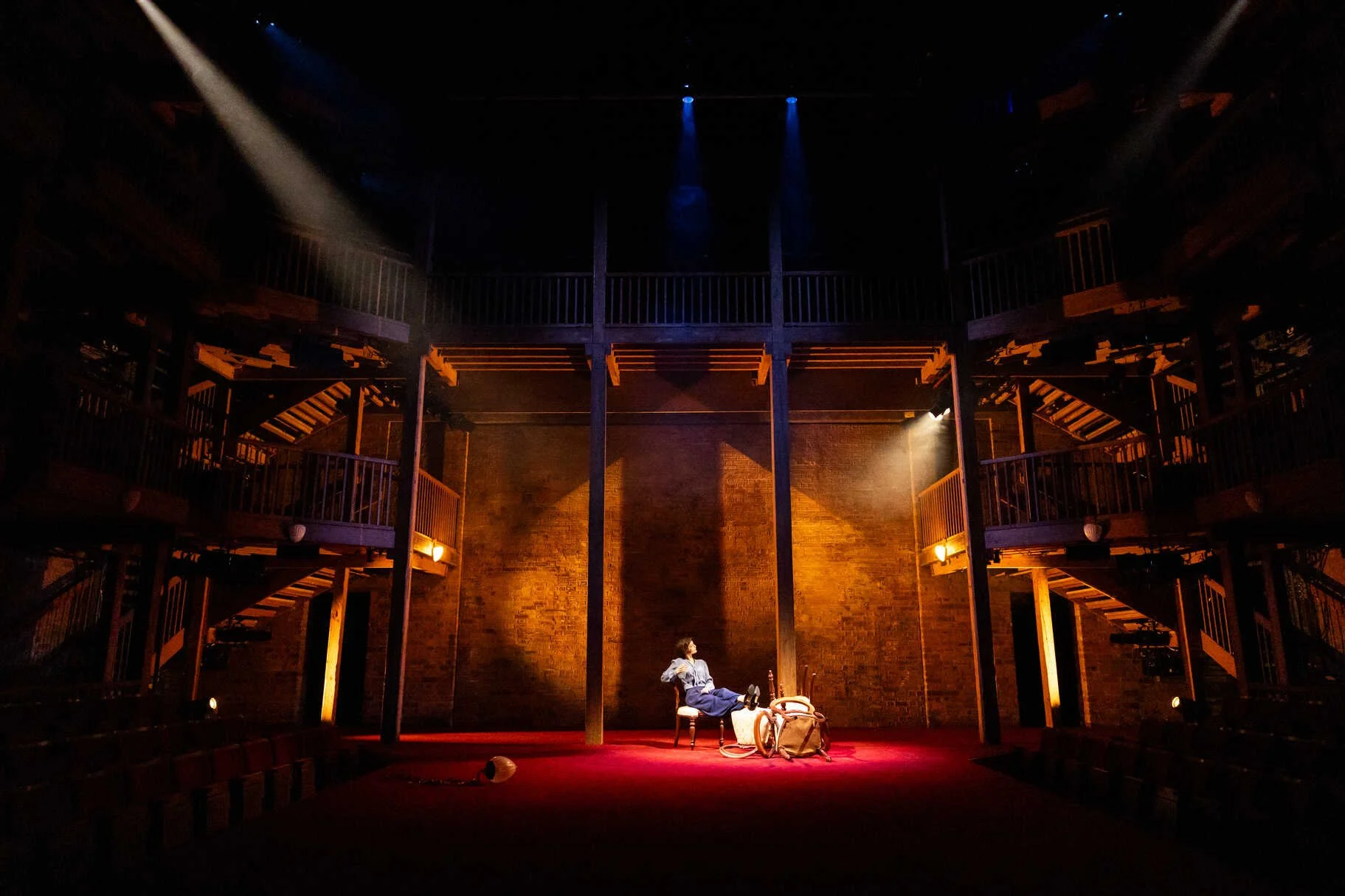
Photo credit: Cam Harle
The Forsyte Saga
Parts I and II, John Galsworthy, Adapted by Shaun McKenna & Lin Coghlan
RSC, The Swan, Stratford Upon Avon, restaged from The Park, Finsbury Park.
Runs: 2h 30m (each part) with one interval in both parts
Continues until: Saturday 10 January 2026
⭐⭐⭐⭐ Review by Roderick Dungate, AD performances, Saturday 27 December 2025
“Clever and thoughtful adaptation, strong company”.
This is an adaptation that demands and rewards your close attention. It’s scope is huge. Galsworthy’s use of the word Saga really says it all. In his novels he attempts to write into legend the - by the time he finishes - moribund Victorian upper-middle class. A tightly knit network of power and wealth holders; a group who, hover much they try, cannot withstand the forces of Time itself.
The wealth and the power, of this group of people manifests through appearance; that of their possession which are all to them, and also their personal outward appearances, which constrain their inner selves.
The adapters have wisely pared great swathes of the novels away. Gone are the walks in the parks and gardens, gone the endless lunches, dinners, clubs. A red, rich carpet and (in Part I) a rich rear curtain signify their wealth. Their clothes (sets and costumes by Anna Yates) also tell us much. The rear curtain opens as the society begins to open; it is also skilfully manipulated to create the feeling of the house in Robin Hill. There are almost no props and little furniture.
This is a space we can fill in our imaginations, and it enables us to keep the Robin Hill house, with its oak, omnipresent. The house signifying change, the oak signifying permanence.
All focus is on the acting. This is uniformly strong, cleverly and wittily managed in Josh Roche’s strong and sensitive production. Joseph Millson as Soames Forsyte is a great scaffold on which to hang the saga. He is a constant through the story, ageing but unchanging. His outbursts of emotion are shocking and set up a dilemma we are unable resolve. Was his great passion love, or possession, or is possession the only way he can express himself in love? Soames young and older is played by one actor.
There are truly no weaknesses in this ensemble. Other than Soames, Irene (a stately yet vulnerable performance from Fiona Hampton), and Fleur (Flora Spancer-Longhurst), major characters are played by two actors, a younger and older. Somehow this tightens the ensemble and our sense of the wholeness of the Forsytes-cum-Upper Middle class.
This is all terrific. However, my caveat concerns the ‘final quarter’, that is Part II from the interval onwards.
This final sequence brings the 1920s young couple – Jon and Fleur briefly back together, so the warring factions of the family seem to achieve some kind of closure. The family home and Soames’ art collection (signifying the upper middle class grasp on wealth) are burned in a great fire. Closure; neat and tidy. But the whole dramatized Saga, through this increase in action, loses momentum; it drags.
Galsworthy offers us a different ending, one, on the face of it, less satisfactory. Fleur and Jon cannot marry. Emotionally, Jon cannot hurt his mother, so Fleur, although she wishes to, cannot achieve what she wants. She has an unsatisfactory marriage to Michael Mott, a minor member of the upper class, John goes to South America to run away and also seek his fortune, successfully or not we do not know. Irene , his mother, sells up the house in Robin Hill; her future seems unfulfilled.
No ends are tied up. This is a much more fully satisfying and realistic ending; the Victorian upper middle class did not have a neat ending. The class fractured, changed, dissipated, merged into other groupings in society. They did not end in drama, as might a six part TV costume drama on TV.
Despite this qualm, the RSC’s restaged Park Theatre’s production is well worth, more than well worth, seeing.
Cast
Flora Spencer-Longhurst – Fleur Forsyte
Nigel Hastings – James Forsyte/Jo Forsyte/Harold Blade
Emma Amos – Emily Forsyte/June Forsyte/Hollie Forsyte Dartie
Fiona Hampton – Irene Forsyte
Florence Roberts – June Forsyte/Annette Forsyte/Anne Forsyte
Micheal Lumsden – Swithin Forsyte/Jolyon Forsyte/Prosper Profond/Riggs
Joseph Millson – Soames Forsyte
Abigail Mahony – Euphemia Forsyte
Paul Carroll – George Forsyte
Michael Lumsden – Jolyon Forsyte/Doctor
Andy Rush – Philip Bosinney/Mr Polteed/Jon Forsyte
Jamie Wilkes – Jo Forsyte/Policeman/Michael Mont
Amma Amos – Juley Forsyte
Creatives
Adapters – Shaun McKenna & Lin Coghlan
Director – Josh Roche
Designer – Anna Yates
Lighting – Alex Musgrave
Composer & Sound – Max Pappenheim
Audio Describers – Julia Grundy & Carolyn Smith