The Hallé plays Janacek, Tchaikovsky and Dvorak, Royal Concert Hall, Nottingham |04 June 2026 ⭐⭐⭐⭐⭐ Review by William Ruff
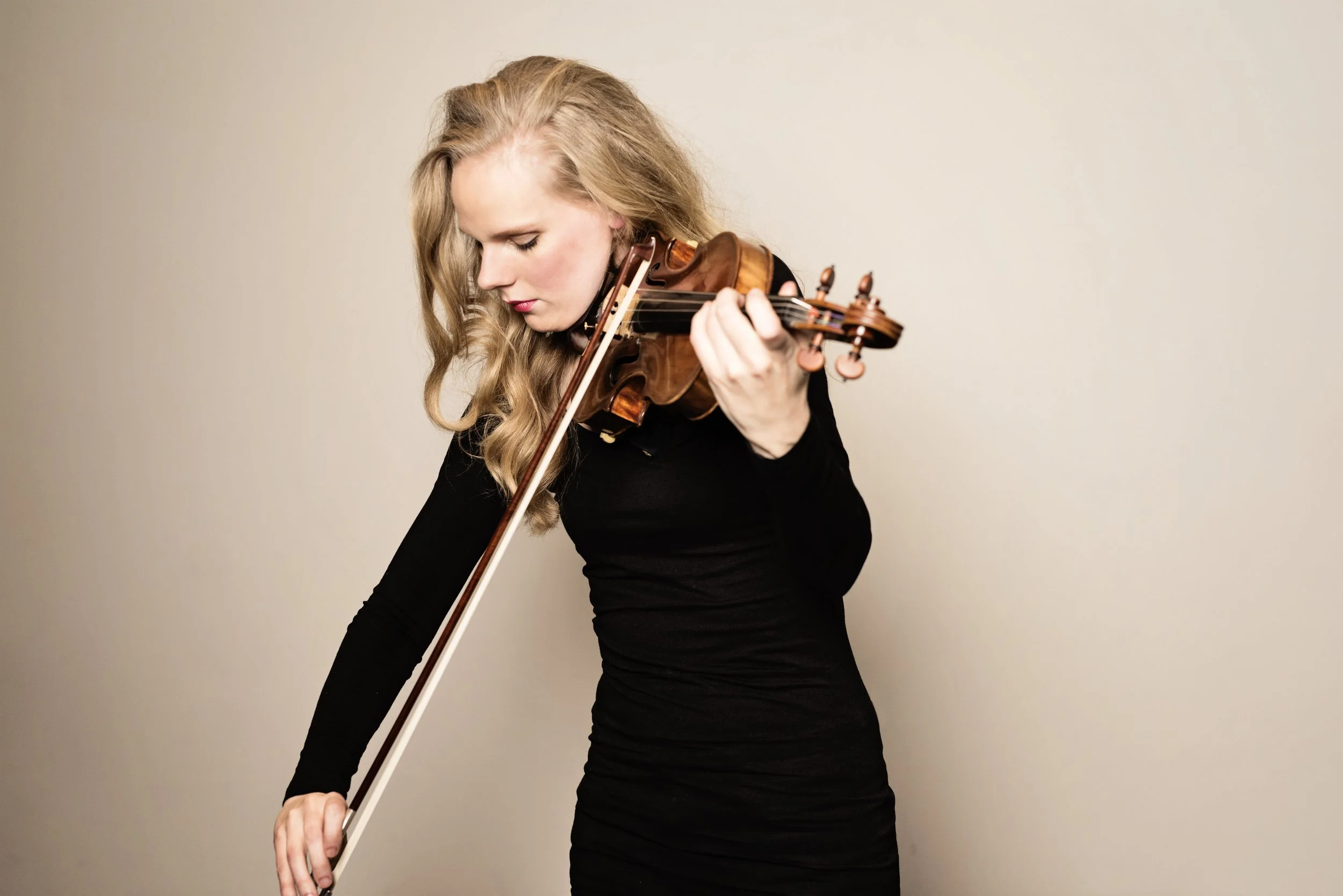
Photo credit: Otto van den Toorn
The Hallé plays Janacek, Tchaikovsky and Dvorak
Royal Concert Hall | Nottingham, 04 June 2026
⭐⭐⭐⭐⭐ Review by William Ruff
“The Nottingham Classics season ends with a Technicolor journey through the Slavic soul.”
This was the final concert of another successful 2025-6 Nottingham Classics season, so it’s not surprising that the audience was in celebratory mood. Even so, I can’t remember the last time a concerto received a standing ovation…in the middle. And most of those who didn’t get to their feet still applauded and cheered, even those who wouldn’t normally dream of doing so until the end.
So what happened to convert all those sticklers for concert etiquette? Well, it happened at the end of the first movement of Tchaikovsky’s Violin Concerto and it was a combination of magnificent playing by the Hallé, incisive conducting by Euan Shields and, more than anything, thrilling playing by soloist Simone Lamsma. You knew you were onto a winner right from the violin’s deeply thoughtful, almost improvisatory opening cadenza and the main theme, its soaring melody, so typical of its composer’s gift for passionate song. Her treatment of the second theme was more intimate, almost yearning before her highly dramatic dialogue with the orchestra. And then there was the cadenza, the movement’s emotional summit – deemed unplayable by some of Tchaikovsky’s contemporaries but played with jaw-dropping precision by Simone Lamsma. You can see why the audience didn’t sit on their hands after all that.
The rest of her performance was equally satisfying: the slow movement’s brief, tender song of melancholy beauty and the joyous Russian dance that sweeps everything before it in the finale. It’s astonishing to note that this concerto elicited one of music history’s most notorious reviews. In 1881 Eduard Hanslick complained that Tchaikovsky’s dreadful music ‘beats the violin black and blue…it’s music which stinks in the ear...’ In Simone Lamsma’s hands it was far from being simply a vehicle for virtuoso pyrotechnics. Together with Euan Shields and the Hallé she made it a work which reached deep into Tchaikovsky’s musical psyche, transforming emotional trauma into radiant, life-enhancing splendour.
For the rest of the evening Japanese/American conductor Euan Shields was very much centre-stage. Still in his 20s, his career so far has been meteoric, winning prestigious awards and prizes and now nearing the end of a three-year stint as Assistant Conductor of the Hallé and Director of its Youth Orchestra. He has won much praise for the dynamism and precision of his conducting. And you can see why. This concert began with Janacek’s Taras Bulba, music which distils the essence of Gogol’s novel into three Technicolor sound pictures. Each of its three movements centres on a death – and each is particularly bloody, showing the heroic nature of Ukrainian Cossacks fighting for independence. In the first Cossack chief Taras Bulba executes his own treacherous son; in the second his surviving son is gruesomely tortured before being killed by the enemy; in the third Taras himself is captured, nailed to a tree and burnt alive.
Not really material for a good night out in central Nottingham, you might think – but Janacek wrote a glowing score, full of emotional energy and an uncanny ability to mix orchestral colour to achieve a vast emotional range. You can forget about the brutal details and hear the work as a concerto for orchestra, with the spotlight falling on each section and on soloists within those sections. Euan Shields’ vision of the epic nature of the work and his control over this vast, intensely colourful, highly detailed canvas were impressive throughout.
Finally came Dvorak’s 8th Symphony. It could easily have been an anti-climax, but it wasn’t. Euan Shields let the profusion of melodies in the opening movement unfold with persuasive symphonic logic; he controlled the dramatic mood swings of the slow movement with a real sense of drama and he made all the tempo contrasts of the finale make perfect sense. But he was perhaps most impressive in the third movement: a waltz-like dance that has to seem lighter than air. And it did. The Nottingham Classics audience now has to wait till September for a new season, but they will have some thrilling music-making to remember in the meantime.
The Hallé
Euan Shields, conductor
Simone Lamsma, violin