Unravelling My Parts by Rod Dungate, Performed at The Crescent Theatre,BirminghamJuly 11 2025, 7.30pm. Review by Manish Popat-Szabries
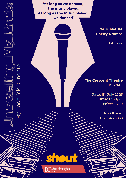
Unravelling My Parts
Rod Dungate
Performed at The Crescent Theatre,
Birmingham
July 11 2025, 7.30pm
Review by Manish Popat-Szabries
When I climbed down into the ‘dungeon’ at the Crescent Theatre, I was pleasantly surprised to find a cosy atmosphere, close to the performers. No stage. No curtains. No theatrical paraphernalia. Just the scriptwriter and the three actors with scripts in hand, sitting patiently for the show to begin, along with the twenty or so audience members.
When I first heard that the actors would be experimenting with a raw script in front of a live audience and expecting some form of feedback from it, I imagined a Shakespearian audience who didn’t go to ‘see’ a play but to ‘hear’ it. In this age of short attention spans, the idea was daunting. I wonder if this is why the performance was grouped into 24 ‘parts’, ranging from a few seconds to fifteen minutes in length…
The proceedings began with a Shakespearian flourish – ‘we write in sand’ – the first phase of the ‘unravelling’ to echo the title of the show.
In spite of both the sexual connotations of the title and the idea of ‘baring your soul’ to a public audience, what became clear was the concept of a journey: in the search for meaning – for identity – you are ‘waiting for an incoming tide’, suggesting that the process is either somehow self-defeating (the tide washes away the words) or ongoing (you write yourself anew with each new word you write in the sand.)
When the words were repeated at the end of the ninety-minute voyage through Rod’s imagination, it felt like we hadn’t just turned a full circle back to where we started, but had ended up somewhere else.
On the surface, the show ends with the idea that the self is the ‘sum of the marks we conjure’, but at a deeper level, the poetry symbolises that the essence of someone’s soul or identity – what makes you ‘you’ – is somehow MORE than the sum of your parts, the parts being all the voices expressed in the show; all the individuals you’ve interacted with throughout your life.
With this in mind, the most powerful sketch was ‘Windows’ which implied that in our tech-heavy world we’re all data robots – ‘I’m walking, I’m walking’ – either collecting information (spying?) on others or having information collected about us. In short, we are never invisible and our identities are created by those who perceive us, not through any personal agency. It reminded me of Sartre’s expression in one of his plays: ‘hell is other people’.
The sketches that worked best were those which involved direct interactions between the actors especially the ‘Brighton Beach’ sequence, ‘Lunchbox’, ‘Shovelling shit’ and ‘Clearing away’ where the different voices were strongly juxtaposed and projected dramatically to develop a dramatic tension between performer and audience.
The sketch ‘Tell it as it is’ was the most powerful individual voice, again owing to the movement around the room and interaction with the audience. The ‘monologue’ captured the pent up frustration of a David who told the ‘real’ version of events leading up to his conquest of Goliath. If David’s sexual motive to pursue his arch enemy wasn’t clear enough, the humour of his sexual repartee with one or two audience members drove the message home in this rendering of a familiar biblical story.
One of the songs had this quality – ‘I don’t understand you’ – which was the only one with music and also had Ralph, one of the performers, sing in harmony with another performer, Taj, at the end, to enhance the effect of barriers between people even though they’ve shared intimacy.
Rod was right. Poetry in the hands of actors is somehow transformed when performed for an audience. Some of Rod’s poems, familiar from his quirky readings during Cannon Poets’ workshops, revealed something new: an unexpected fragility and invigorated imaginative power that could only emerge on a stage.
I loved how the parts were strung together by those intermingling themes of writing, imagination and, of course, love, which became symbolic motifs of the endless process of ‘unravelling’. Added to this, the reworking of some ancient myths and religious values gave an often humorous edge to the show.
And of course, any attentive ear would pick up on Rod’s perennial influences: those resonances of Eliot (‘measure out my life in episodes’), Larkin (‘your mum and dad…’) and Shakespeare (‘the rest is silence’) amongst others.
Oh. And I should really mention another feature that could have easily been overlooked: how the end of each of the 24 ‘parts’ of the scripted performances was signalled by a gentle touch of a Buddhist prayer gong…
...By a half-dreamy, half-smiling Rod Dungate, looking quite like the proverbial Enlightened One sans his shady fig tree, unravelling his parts indeed.
Manish Popat-Szabries
July 2025