Fenella Humphreys (violin) and Martin Roscoe (piano). Lakeside, Nottingham, 02 October 2025, 5✩✩✩✩✩. Review: William Ruff.
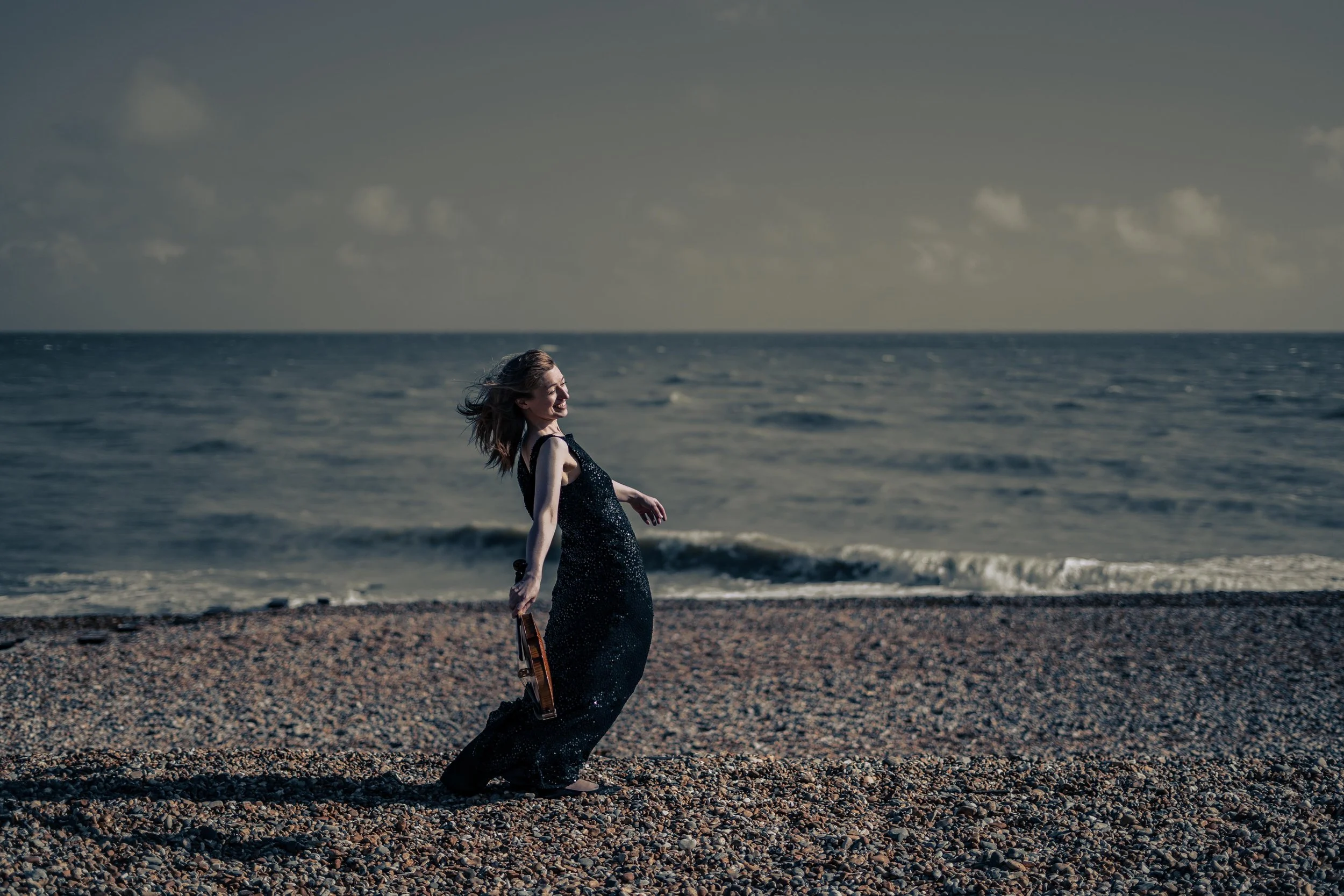
Photo Credit: Lakeside.
Fenella Humphreys (violin) and Martin Roscoe (piano). Lakeside, Nottingham, 02 October 2025,
5☆☆☆☆☆. Review: William Ruff.
“A new season at Lakeside opens with a revelatory programme given passionate advocacy.”
Lakeside is well-known for its adventurous concert planning – but there can’t have been many new seasons over the years which have opened with quite as many surprises as Thursday night’s recital. Violinist Fenella Humphreys and pianist Martin Roscoe, both multi-award-winning artists, presented a programme which must have had even the most-seasoned concert-goers rushing for their reference books.
Fenella Humphreys was a delightful guide throughout the evening to the intriguing programme she had compiled. Her starting point was in the archives at London’s Wigmore Hall to see what was being performed there a hundred years ago in 1925. It was no surprise to see that Prokofiev, Stravinsky and Honegger featured – but who today is familiar with the work of Rebecca Clarke and Dorothy Howell? So one purpose of Thursday’s concert was to venture into the cultural museum and blow the dust off exhibits which have been neglected for too long.
One major exception to the 1925 rule was Mendelssohn’s youthful Sonata in F minor (written a century earlier in 1825). He was only 14 when he wrote it, proving that he must have been the most mature child prodigy that ever lived. It’s a piece which reflects the young composer’s respect for classical rules whilst at the same time satisfying his romantic sensibilities. Humphreys and Roscoe gave it a performance full of lyricism, clarity and emotional directness (the opening violin cadenza was especially striking) and were powerful advocates for a work which features a dramatic, passionate opening movement, its tender, soulful Adagio and its high-octane, virtuosic finale.
The second Violin Sonata of Swiss composer Arthur Honegger also featured: often turbulent, uncertain in direction, sometimes austere. Its language may be difficult to grasp at times but it is never less than bold, frequently biting and propelled with a sense of restless energy. Humphreys and Roscoe were as one in their exploration of the work’s dramatic contrasts and both seemed to revel in the way the composer pushes their instruments to expressive limits.
The pieces by Rebecca Clarke (Midsummer Moon) and Dorothy Howell (Phantasy) came as revelations, the first marked by shimmering harmonies and a sense of poetic reverie and the second making listeners wonder why its composer has ever been forgotten. Dorothy Howell’s time for rediscovery is well overdue, if this lush, expressive piece is anything to go by. The Phantasy is in one long movement whose contrasting sections flow seamlessly from one to the next and which is crammed full of sweeping melodic lines and dramatic shifts in dynamics. Humphreys and Roscoe are quite right to rescue it.
Also on the programme: Stravinsky’s Suite Italienne (a violin-and-piano showpiece derived from his ballet Pulcinella) and Prokofiev’s Five Melodies (each with its own distinct atmosphere: gentle, playful, mysterious, exuberant). Contemporary composer Adrian Sutton also featured: his Eulogy a lyrical, understated work, the sort of piece which invites the listener to reflect and remember as it builds from a restrained opening to an intense climax before subsiding into tranquillity again.
There was an encore: more Dorothy Howell, as if to remind the audience about one of the concert’s guiding principles – to restore what has been neglected. Fenella Humphreys and Martin Roscoe clearly share a sense of cultural justice as well as virtuosity, imagination and insight.
Fenella Humphreys (violin) and Martin Roscoe (piano)