The Hallé. Royal Concert Hall, Nottingham, 30 September 2025, 5✩✩✩✩✩. Review: William Ruff.
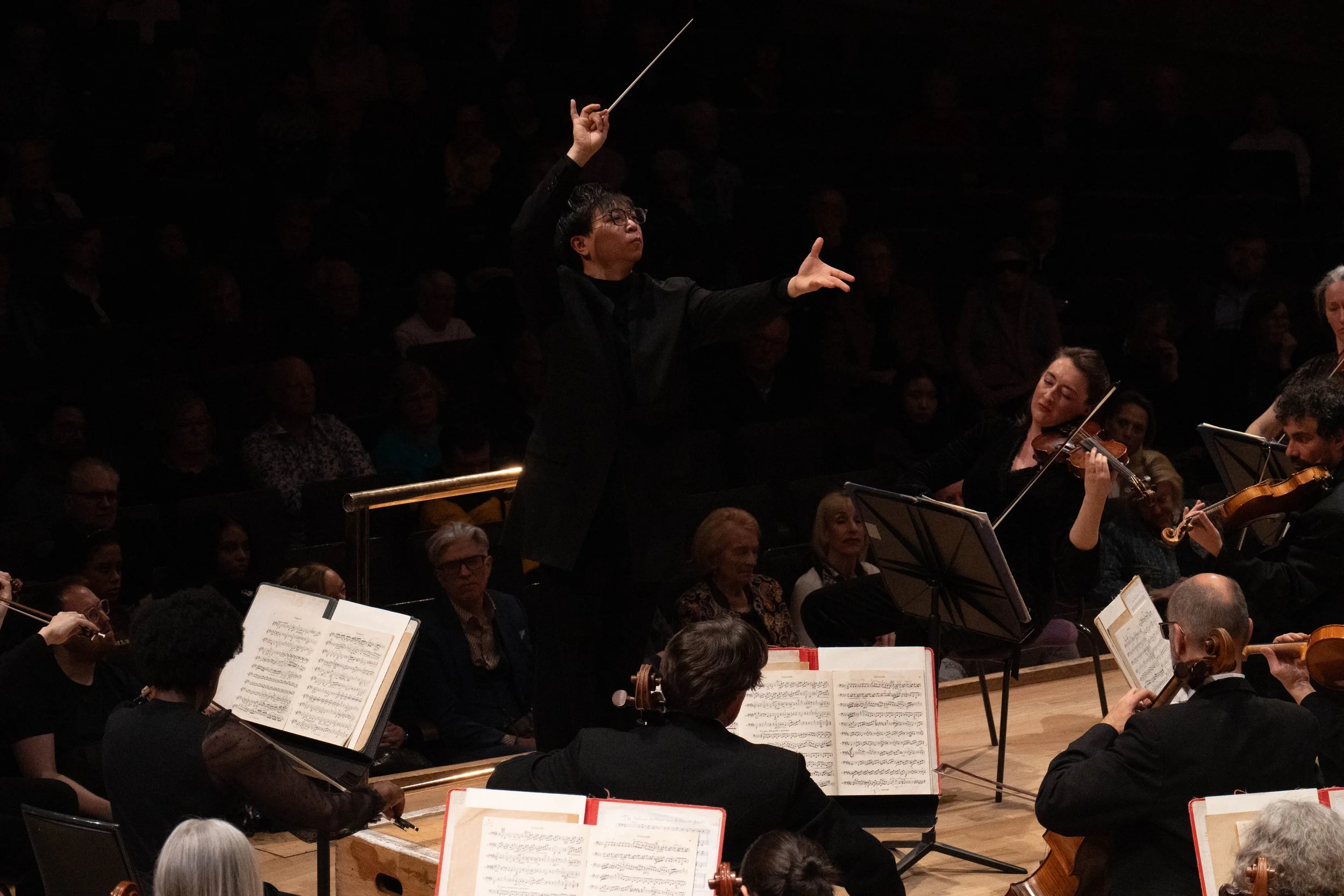
Photo credit: Sharyn Bellemakers The Hallé.
The Hallé. Royal Concert Hall, Nottingham, 30 September 2025,
5☆☆☆☆☆. Review: William Ruff.
“The new Nottingham Classics season is launched in spectacular style.”
No one could accuse the new Nottingham Classics season of tiptoeing gingerly onto the concert platform. If you’re going to celebrate the end of the summer drought of classical music at the Royal Concert Hall, you need something with plenty of snap, crackle and pop. And Shostakovich’s Festive Overture did very nicely. Everything about it bursts with high-octane energy: the brilliant brass fanfare with which it opens and then the lively theme which drives forward with pulsating rhythmic energy, cascades of notes and a sense of exuberant celebration. The Hallé’s conductor, Kahchun Wong, was in his element, directing a full-blooded performance and clearly enjoying himself.
The Hallé has a new principal cellist: Rachel Helleur-Simcock, a musician who found herself thrust into the limelight at relatively short notice because of the ‘unforeseen circumstances’ which prevented the advertised soloist from performing. This was no mean feat as the work she performed with The Hallé was Elgar’s Cello Concerto, the sort of piece which is hard-wired into British audiences and about which they have strong opinions. Elgar wrote his concerto in the aftermath of World War 1 and it contains much personal and public grief. Rachel’s was a poignantly introspective performance, making the opening chords darkly sombre, opting for spacious tempi in the first and third movements, making the cello sound vulnerable and isolated. Elgar himself would have approved but Rachel’s playing may have surprised those accustomed to bolder, more passionate, more extrovert performances.
If anyone in the audience hadn’t been wrung out by the Elgar, what followed in the concert’s second half would have left their emotional batteries drained. Rachmaninov’s 2nd Symphony bursts with glorious, long-breathed tunes, sumptuously harmonised and orchestrated. It’s also a famous example of the many darkness-to-light journeys so beloved by 19th century composers, starting sombrely and ending with a radiant explosion of unbuttoned joy. However, perhaps the movement which first comes to mind when this symphony is mentioned is the third. If you’re in the right mellow mood, it’s one of the most beautiful slow movements in the repertoire and one which represents Rachmaninov’s melodic genius at its most sublime. Kahchun Wong clearly knows that restraint and control are important in allowing the music to pack its emotional punch rather than wallow in sentimentality. The tender introduction, the heartfelt clarinet solo (beautifully played by Sergio Castellò Lòpez), the impassioned climax, the tranquil serenity of the ending: all these were handled sensitively and with a perceptive focus on detail.
Conductors are sometimes tempted to cut this famously long symphony – but not Kahchun Wong. And he was right: such expansiveness is an essential part of the work’s meaning and it certainly gave his orchestra plenty of opportunities to shine, both as soloists and as a sharply focused ensemble.
The Hallé
Kahchun Wong, conductor
Rachel Helleur-Simcock, cello