Opus13 plays Beethoven, Adès and Brahms Lakeside, Nottingham | 15 October 2026 ⭐⭐⭐⭐⭐ Review by William Ruff
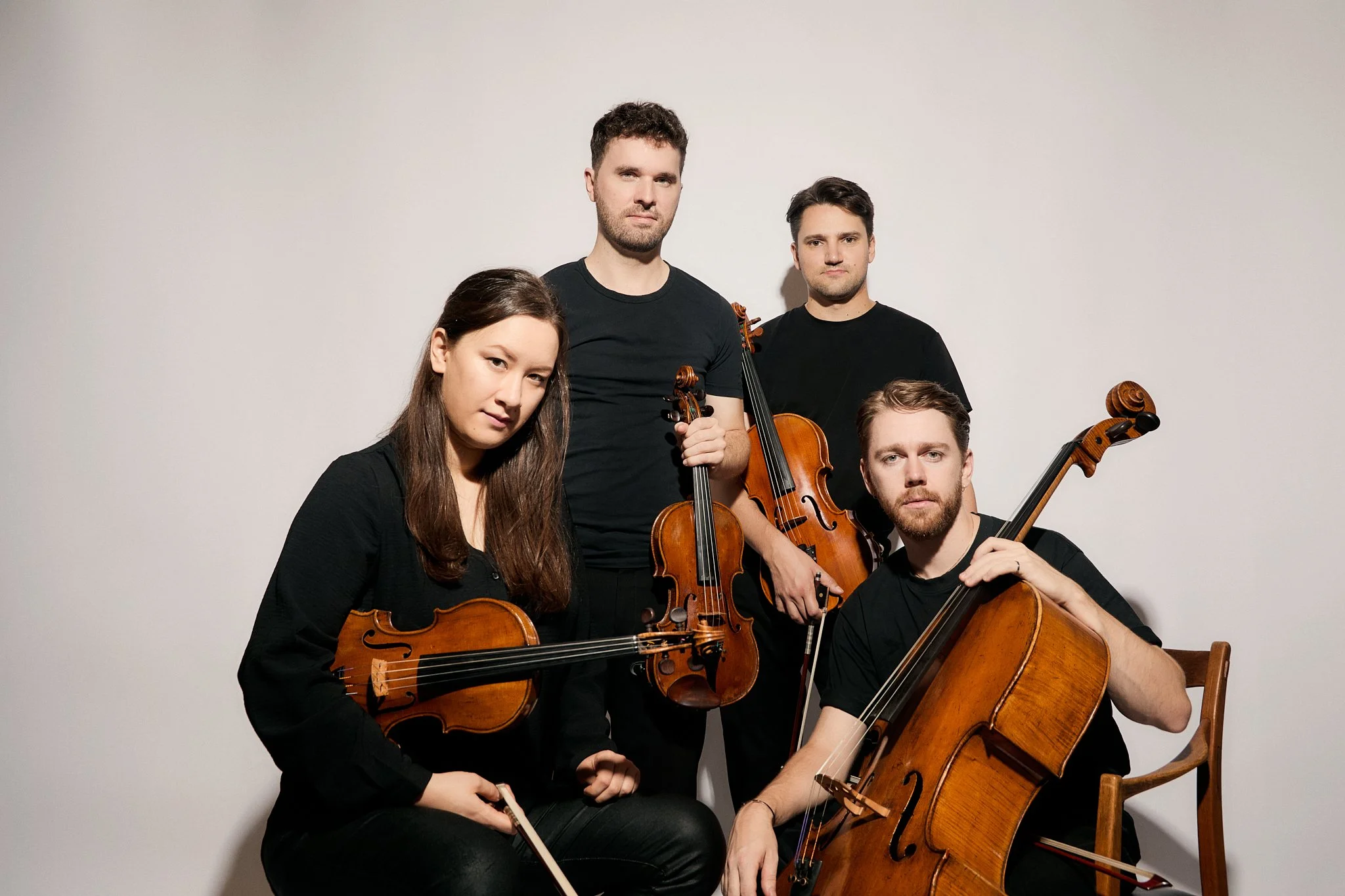
Photo credit: Elvira Glänte
Opus13 plays Beethoven, Adès and Brahms
Lakeside, Nottingham | 15 October 2026
⭐⭐⭐⭐⭐ Review by William Ruff
“Brilliant playing from four exceptional young musicians.”
If chamber concerts should feel like musical conversations between friends and equals, they can also be musical journeys through history. Lakeside has started its new classical season with four exceptional young Norwegian musicians in a concert that was both. Opus13’s programme (Beethoven, Adès, Brahms) traced a line from the string quartet’s classical beginnings through late 20th century evocations of the past, to one of the high points of Romantic intensity.
Opus13 (winners of both the Wigmore Hall and Bordeaux competitions last year) started with one of Beethoven’s earliest chamber works, his Quartet Op.18 No 3, inspired by Mozart and Haydn but showing just how keen Beethoven was to develop the form in dramatic new directions. Opus13 relished the opening movement’s witty surprises but without exaggerating them. The slow movement had a graceful, almost Mozartian surface; the Scherzo’s off-beat accents were crisply pointed and the finale was full of bounce and high spirits. The four musicians were alive throughout to the jagged drama of this period of Beethoven’s music. Unsurprisingly, they were equal to any technical demand the composer put in their way but not so honed as to smooth over some of the craggier passages. Here was Beethoven the musical giant flexing his muscles, at the start of his extraordinary journey of musical innovation and exploration.
Next came Arcadiana by Thomas Adès, written when the composer was just 24. It is a set of seven miniatures evoking ‘vanished or vanishing idylls’, the odd-numbered movements descriptive of water and the even ones rooted in the land. And those seven sound worlds are all so distinctive and require astonishing technical mastery to bring them alive. Opus13 captured the mystery of the opening Venezia notturno, its pizzicato notes suggesting a gondola moving through Venice’s canals. Das klinget so herrlich was played with great delicacy, its bells (à la Magic Flute) gently chiming. The O Albion movement was the emotional heart: a hushed, almost Elgarian hymn, Opus13’s intonation pure, their phrasing tender. Lethe closed the work in ways that were both haunting and ambiguous. The sounds were often very strange and disorienting: impossible to translate into words but powerfully evocative in effect.
After the interval came Brahms’ C minor Quartet, a work that’s large-scale, even heroic in mood. Opus13 conveyed all the turbulence of the opening movement, as well as its rhythmic complexity, the second movement Romanze following as a calmly lyrical contrast. The Allegretto has a long, relaxed line in the first violin which sways along, taking its time. Opus 13 managed this beautifully, as well as the ways in which musical ideas are passed from one instrument to another. The finale returned to a mood of explosive energy, the players balancing the grandly heroic with much quieter, more intimate musical conversations. The ending was thrilling.
Early Beethoven, mature Brahms, experimental Adès: it would be easy to make the three pieces seem separate and disconnected. Opus13 made them cohere, with playing of probing intelligence, exceptional clarity and tonal richness, making each piece illuminate the others. It’s clear that the world of chamber music has another young ensemble of immense talent and potential. The message to them from Thursday’s Lakeside audience was simple: come back soon.
Opus13
Sonoko Miriam Welde, violin
Edvard Erdal, violin
Albin Uusijärvi, viola
Daniel Thorell, cello